
The best beginner scooter matches the rider’s age, height, and confidence level. For toddlers aged 2–4, a three-wheeled model with a wide, low deck is the safest starting point. From around age 5, a two-wheeled kick scooter with an adjustable handlebar and rear foot brake is the natural step up. Get those two decisions right, and everything else falls into place.
- Children can begin on a wide-deck, three-wheeled scooter from as young as 18 months — with close adult supervision.
- The Consumer Product Safety Commission (CPSC) records roughly 90,000 scooter-related emergency room visits in the United States every year, the majority involving riders not wearing helmets.
- The single most common buying mistake is choosing a scooter that is too tall or too heavy for the child.
- The four non-negotiables: correct handlebar height, appropriately sized wheels, a working foot brake, and a weight rating that comfortably exceeds the child’s body weight.
What Age Is Right to Start on a Scooter?
Age is the first filter — but it is really about developmental readiness rather than a fixed birthday. Most children can stand and balance reliably from around 18 months, which is the point at which a wide-deck, three-wheeled scooter becomes viable under close parental supervision. By age 3, the majority of children have the leg strength and coordination to propel themselves confidently on a three-wheeled model and steer it by leaning their body weight from side to side.
Some of the links in this article may be affiliate links. If you make a purchase through these links, we may earn a small commission at no extra cost to you. Thank you.
The jump to a two-wheeled kick scooter typically happens between ages 4 and 6, depending on the individual child. Research in child motor development shows that bilateral coordination — the ability to use both sides of the body independently and rhythmically — matures around this window. Children who have already spent time on a balance bike often make this transition earlier, because they have built the core balancing instincts a two-wheeled scooter demands. If your toddler is not quite ready for a scooter yet, you can find detailed sizing and brand guidance in our complete walkthrough of how to choose the best balance bike for your child.
How Do You Match Scooter Size to Your Child’s Height?
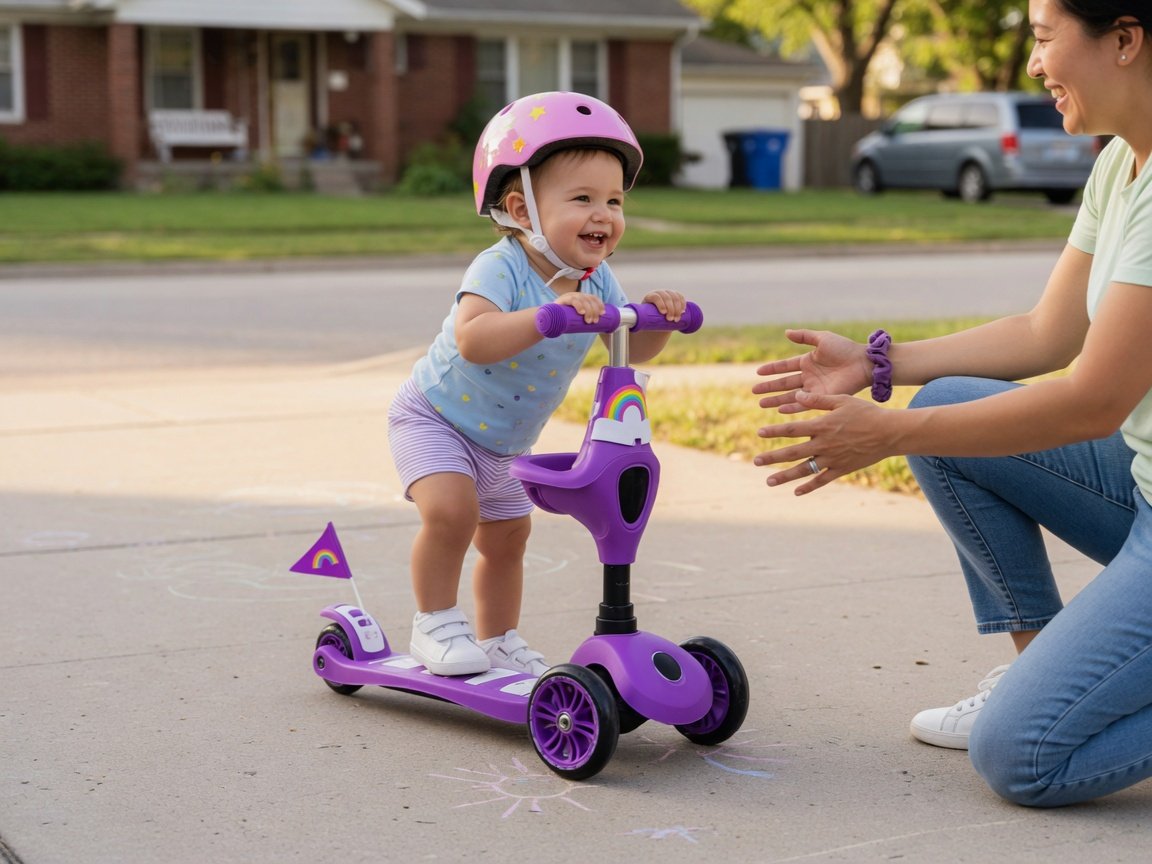
Handlebar height is the most important dimension to get right, and it is the one most often ignored in the rush to find a fun-looking model. When your child stands on the deck with their hands on the grips, their elbows should have a slight bend — not locked straight, and not raised up toward their shoulders. A locked-out elbow grip puts unnecessary strain on the wrists and makes the scooter harder to steer. A gentle elbow bend gives natural control and absorbs bumps without effort.
| Child’s Height | Target Handlebar Height | Typical Age Range |
|---|---|---|
| 80–95 cm (31–37 in) | 55–65 cm (22–26 in) | 2–3 years |
| 95–110 cm (37–43 in) | 65–75 cm (26–30 in) | 3–5 years |
| 110–125 cm (43–49 in) | 75–85 cm (30–33 in) | 5–8 years |
| 125–145 cm (49–57 in) | 85–95 cm (33–37 in) | 8–12 years |
| 145 cm+ (57 in+) | 90–110 cm (35–43 in) | 12 years and above / adults |
Always choose an adjustable handlebar over a fixed one. Industry data shows that adjustable handlebars extend a scooter’s useful life by up to three years, because the scooter grows with the child rather than being outgrown in a single season. For children under 5, check that the minimum handlebar height setting is genuinely low enough — some scooters marketed as “beginner” models have a minimum that is still too tall for a small 3-year-old, which forces the child into an awkward locked-arm posture from the very first ride.
How Many Wheels Does a Beginner Need?
This question splits neatly by age and balance development. Three-wheeled scooters — typically two wheels at the front and one at the rear — offer a forgiving, self-stabilising ride that suits toddlers and preschoolers still building their sense of balance. They steer by leaning rather than rotating a handlebar, which young children pick up quickly, and which builds proprioceptive awareness that pays dividends when the child moves onto more complex wheeled toys later.
Two-wheeled scooters require active, continuous balance. The rider must shift their weight to stay upright while gliding. For most children, this skill arrives reliably between ages 4 and 6. Two-wheeled scooters are faster, more manoeuvrable, and offer a much longer riding life — a well-built model can carry a child comfortably into their pre-teen years. Once your child has found their footing on two wheels, the next step is technique. Our detailed walkthrough of how to ride a kick scooter for beginners covers everything from first push-offs to smooth, confident turning.
What Wheel Size Is Best for a Beginner?
Wheel diameter directly affects how smooth and forgiving the ride feels underfoot. Smaller wheels — in the 98–110 mm range — are lighter and work well on perfectly smooth surfaces such as indoor floors and skate parks. But they catch on pavement cracks and small stones more easily than larger wheels, which can unsettle a beginner who is still learning to react quickly. Larger wheels, from 120 mm upward, roll over surface irregularities more smoothly, maintain momentum through gentle inclines, and give the rider more time to adjust before a wobble becomes a fall.
| Wheel Size | Best For | Trade-offs |
|---|---|---|
| 98–110 mm | Smooth indoor surfaces, skate parks, light riders | Less forgiving on rough or cracked pavements |
| 120–145 mm | Everyday outdoor use — pavements, parks, school runs | Slightly heavier than smaller-wheeled models |
| 180–200 mm | Longer distances, uneven terrain, older children and adults | Adds meaningful weight; overkill for young starters |
For most beginner children riding on everyday pavements and paths, a wheel in the 120–145 mm range is the sweet spot. Material matters too. Polyurethane (PU) wheels deliver a smoother, quieter ride than cheaper hard plastic wheels, and they last considerably longer before wearing flat. When reviewing a scooter’s product description, look specifically for “PU” or “polyurethane” in the wheel specification — it is worth paying a small premium for, especially on a model the child will ride daily.
What Safety Features Matter Most on a Beginner Scooter?
Safety is not a feature you add on — it is built into the scooter’s core design, and the first thing to examine is the braking system. Most beginner scooters use a rear foot brake: the rider steps down on the mudguard above the back wheel to slow down and stop. This type of brake is intuitive for young children and requires no hand or finger strength at all. Hand brakes do exist on more advanced and adult-oriented models, but they demand fine motor coordination that most children under 8 have not yet fully developed — and an ineffective brake is simply a safety hazard.
Beyond the brake, check the deck surface. Many budget scooters use a painted metal deck that becomes genuinely slippery when wet. A textured or rubberised grip surface keeps feet planted even on damp morning school runs. Also look for rubber or foam handlebar grips — bare metal bars allow hands to slide, especially when a child is tired or nervous. Finally, inspect the folding mechanism if the scooter folds. It should click firmly into the open position with zero play or wobble, because a stem that folds unexpectedly mid-ride is a serious hazard and one of the most common failure points on lower-cost models.
Does Scooter Weight Actually Matter?
Yes — and it matters in two distinct ways that are easy to overlook when you are focused on colour options and price. First, the scooter’s own weight affects how easily a child can manoeuvre it, carry it up steps, and pick it up after a tumble. A scooter that is too heavy discourages daily riding and makes recovering from a fall harder. A practical rule of thumb: aim for a scooter that weighs no more than 30% of the child’s body weight. For a 20 kg (44 lb) four-year-old, that means staying under 6 kg — which rules out most full-metal adult-proportioned models.
Second, every scooter has a rated maximum rider weight, and riding above that limit causes the deck and stem to flex under load. Flexing destabilises the ride, accelerates mechanical wear, and in extreme cases leads to component failure. Research consistently shows that ignoring weight ratings is a leading cause of premature scooter breakdown and is associated with an elevated fall risk. Always check the rated weight limit before purchasing, and allow meaningful headroom for growth — if a scooter is rated to 50 kg and your child already weighs 44 kg, they will exceed the safe limit within a few months.
Step-by-Step: How to Choose the Right Beginner Scooter
Work through these steps in order when comparing models — whether you are shopping in-store or online. The whole process takes about ten minutes and eliminates the most costly buying errors before money changes hands.
- Confirm developmental readiness. Can your child balance on one foot for three seconds and walk confidently on uneven ground? If not, a balance bike or ride-on toy is still the right starting point.
- Measure your child’s height. Use the handlebar height table above to identify their target range, then immediately filter out any scooter whose adjustment range does not include it.
- Decide on two or three wheels. Under 4 years: three-wheeled. Ages 4–6: assess balance development individually. Ages 6 and above: two-wheeled in almost every case.
- Check wheel size. For everyday outdoor riding on pavements and paths, choose 120 mm minimum. For smooth indoor surfaces only, 98 mm is acceptable.
- Inspect the brake. For children under 8, a rear foot brake is the right choice. A hand brake is only appropriate if the child can comfortably squeeze a bicycle brake lever with full grip strength.
- Verify the weight rating. The maximum rated weight must exceed the child’s current body weight by at least 15 kg to allow for growth.
- Weigh the scooter itself. It should be no more than 30% of the child’s body weight for comfortable daily use.
- Test the folding mechanism. Lock it open, fold it, and open it again at least three times. It must click firmly and cleanly every time with no movement in the stem.
- Check the deck grip surface. Textured or rubberised decks are non-negotiable for outdoor use. Walk away from painted metal decks.
- Budget for safety gear before checkout. A certified helmet is mandatory. Wrist guards reduce forward-fall fracture risk by up to 85% and should be considered essential for first-time riders.
Once the scooter is home, the next job is teaching the actual skill. Our parent’s guide on how to teach your child to ride a kick scooter covers the full progression from first tentative stand to confident gliding — with practical drills you can run on the driveway in under 20 minutes.
How Much Should You Spend on a First Scooter?
Price broadly reflects build quality, and build quality directly determines how long the scooter lasts and how safe it stays over time. The cheapest scooters on the market use plastic frames, fixed handlebars, and small hard wheels — components that flex, loosen, and wear quickly. This matters less for a toddler who may only scoot a few metres at a time, but it matters a great deal for a 7-year-old who rides to school every morning. As a general principle, buy the best quality you can afford within your budget tier, rather than the cheapest option within a tier above it.
| Budget Range | What You Typically Get | Best For |
|---|---|---|
| Under £30 / $35 | Plastic frame, fixed handlebars, small plastic wheels, no folding mechanism. Likely to wobble and wear out quickly. | Short-term trial only — or avoid altogether |
| £30–£60 / $35–$70 | Light aluminium frame, adjustable handlebars, basic PU wheels, rear foot brake. A solid starter option. | Ages 2–5 on a first three-wheeled model |
| £60–£100 / $70–$120 | Aluminium deck and stem, 120–145 mm PU wheels, reliable locking fold, wider weight rating. | Ages 5–10 on a two-wheeled kick scooter |
| £100+ / $120+ | Premium aluminium build, large wheels, dual braking options, high weight limits. Designed to last five or more years. | Older children, adolescents, and adults; long-term investment |
Case Study: Getting the Budget Right
When James, a father of two from Bristol, bought his daughter Rosie a £22 scooter at age 4, the handlebar stem loosened after six weeks of regular riding. After a minor tumble when the stem wobbled unexpectedly, he replaced it with a £65 aluminium two-wheeled model. Rosie rode it daily for three years and then passed it down to her younger brother, who used it for another two. “The cheap one cost £22 and lasted six weeks,” James told us. “The better one cost £65 and lasted five years across two children. The maths is not difficult.”
What Scooter Trends Are Shaping the Market in 2026 and 2027?
The children’s scooter market has changed noticeably over the past two years, and a few emerging trends are worth knowing about before you buy. First, larger wheels are becoming standard even on entry-level beginner models. Where 98–110 mm wheels were once typical for starter scooters, most reputable brands now fit 120 mm or 130 mm PU wheels as their base specification — driven by parent demand for smoother outdoor performance and longer scooter lifespans.
Second, the electric scooter category is beginning to extend downward in age range. Child-specific electric kick scooters with hard speed governors and lower voltage motors are appearing in the 8–12 age bracket. These are fundamentally different products from traditional kick scooters and carry their own distinct safety considerations — for most children under 10, a manual kick scooter remains the right developmental choice. Third, sustainability is entering the conversation: several manufacturers now offer decks made from recycled aluminium or bamboo composites, which appeal to environmentally conscious buyers without sacrificing structural performance. In 2026, these are still premium options, but industry analysts expect them to enter the mainstream price bracket by 2027.
What Should You Buy Alongside the Scooter?
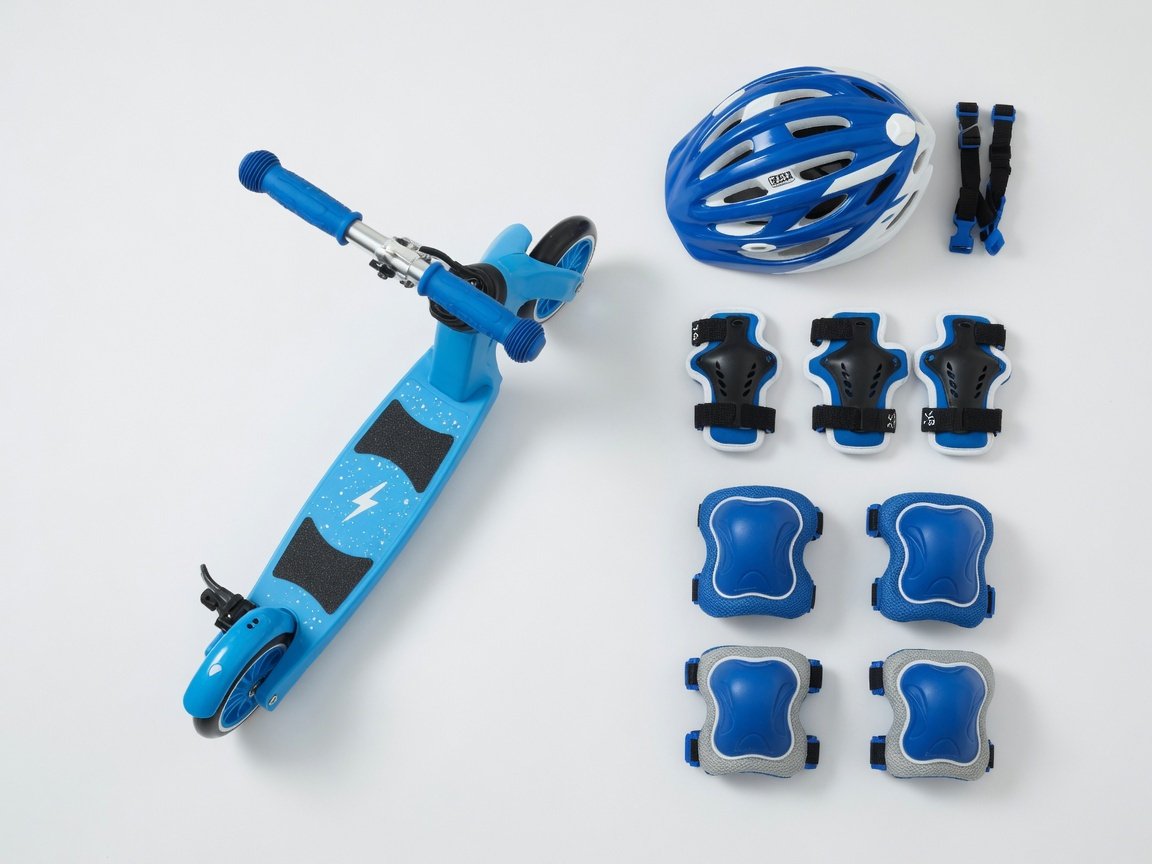
The scooter is only part of the purchase. Safety gear is not optional — particularly in the first few months of riding, when falls happen most frequently and the child has not yet learned to bail safely. The encouraging news is that a full beginner kit does not need to be expensive, and the protection it provides against the most common injury types is substantial and well-evidenced.
- Helmet (mandatory): Look for CPSC certification in the US or EN 1078 in the UK and EU. It should sit two finger-widths above the brow, with a chin strap that is firm but not uncomfortable. Replace after any significant impact — even if no visible damage is apparent.
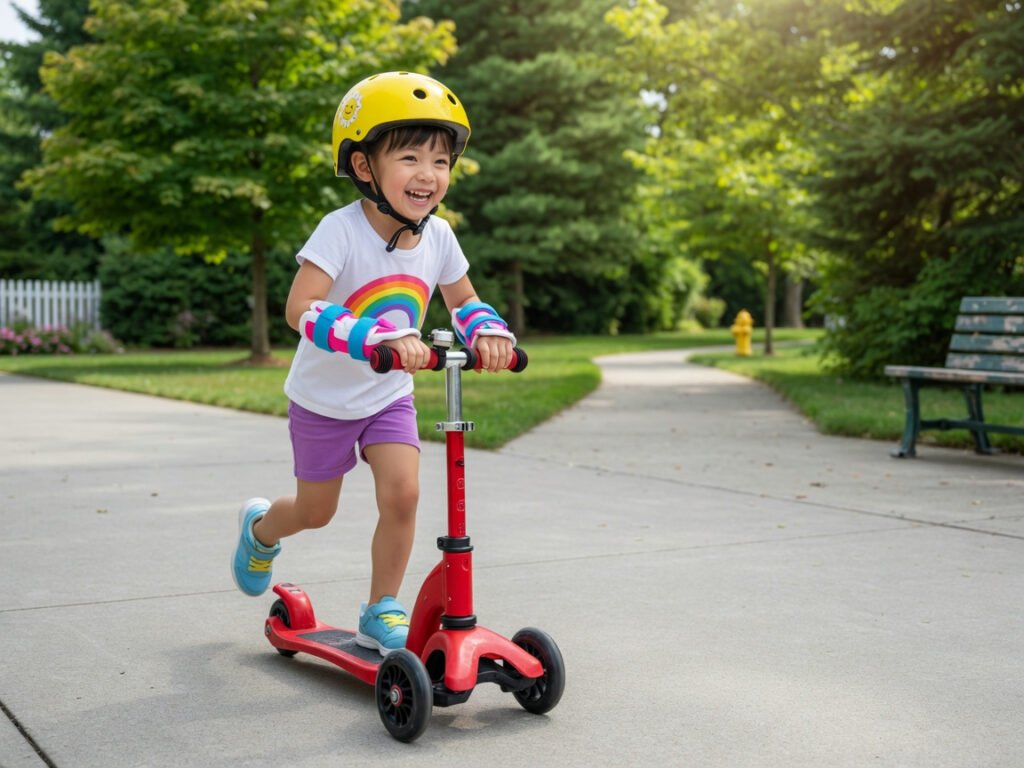
- Wrist guards: Forward falls are the most common scooter accident. Guards with a rigid palm splint absorb and redirect impact energy away from the wrist joint, reducing fracture risk by up to 85% compared with unprotected falls.
- Knee pads: Less critical than wrist guards, but valuable for very young riders who are still learning how to fall safely and instinctively.
- Elbow pads: Useful for cautious riders and those on rougher terrain. Many children drop them naturally once they are fully confident on their scooter.
- Closed-toe shoes: Sandals and bare feet create real foot injury risks when scooting. Non-slip trainers with rubber soles are the right choice for every ride.
If you have ever wondered whether a child can share a ride with an adult on a larger scooter, that is a separate question with legal and safety dimensions of its own. Our guide to whether you can take a child on a scooter covers the rules, risks, and practical considerations in full.
When Is Your Child Ready to Move On?
Most children who start scooting young hit a natural progression point after one to three years. The signs are clear: the weight rating is approaching, the handlebar is maxed out at its highest setting, or the child is visibly going faster than the scooter’s wheel size and braking system are designed to handle. Any of these signals indicates it is time to upsize — either to a larger scooter or to a first pedal bike, depending on the child’s age and interest.
Confident scooter riders — children who glide smoothly, brake predictably, and navigate corners without hesitation — almost always transition to bikes more quickly and with fewer wobbles than those who have not had wheeled-toy experience. The balance, spatial awareness, and proprioception built through regular scooting transfer directly to pedalling. When that moment arrives, our curated roundup of the best bikes for beginner riders will help you find the right next step without the guesswork.
Frequently Asked Questions
What is the best age to start a scooter?
Most children can begin on a wide-deck, three-wheeled scooter from around 18 months to 2 years, with close adult supervision. A two-wheeled kick scooter is typically appropriate from age 4 to 6, depending on balance development. Developmental readiness matters more than a specific birthday: if your child can stand on one foot for three seconds and walk confidently on uneven ground, they are almost certainly ready to try scooting.
Are three-wheeled scooters better for beginners?
For children under 4, yes — three-wheeled scooters are self-stabilising and steer by leaning, which is intuitive for young riders. For children aged 4 and over who already have solid balance, a two-wheeled scooter may actually be the better starting point. Going straight to two wheels builds stronger long-term balance skills and skips the additional transition step entirely. It is worth assessing your individual child’s coordination rather than defaulting to three wheels purely based on age.
How tall should the handlebars be for a beginner?
Handlebars should sit at a height that gives a slight elbow bend when the child stands naturally on the deck with their hands on the grips. A locked-out elbow indicates the bars are too low; raised shoulders indicate they are too high. As a rough guide, aim for handlebar height at around the child’s hip to belly-button level. Always choose a model with an adjustable stem — it is the single feature most likely to extend the useful life of the scooter as the child grows.
Should a beginner scooter have a hand brake or a foot brake?
For children under 8, a rear foot brake is almost always the better choice. It is intuitive — you step down on the fender above the rear wheel to slow down — and requires no hand or finger strength. Hand brakes require lever squeeze strength and fine motor control that many younger children have not yet fully developed, and a brake that a child cannot reliably activate is a genuine safety risk. Reserve hand brakes for older, more experienced riders who specifically request them.
How long does it take a child to learn to ride a scooter?
Most children can scoot independently within one to three sessions of 20 to 30 minutes each. The learning curve is gentler than cycling, because scooting is one-footed — the child keeps one foot on the deck and propels with the other, which feels natural very quickly. Children who already have balance bike experience often manage it in a single session. For practical tips on the learning progression, our parent’s guide on how to ride a kick scooter for beginners breaks the process down into clear stages.
Can very young toddlers under 2 start on a scooter?
Some three-wheeled scooters are rated from 18 months, but in practice most children under 2 do not yet have the leg strength or coordination to propel a scooter purposefully. A push-along toy or ride-on is typically a better fit at that stage. From around 2 to 2.5 years, a three-wheeled model with a very low minimum handlebar setting becomes genuinely viable — look for models designed and weight-rated specifically for toddlers, with a low, wide deck close to the ground. If you are at this stage, our guide to choosing a balance bike explores an excellent alternative that builds the same foundational skills with even greater stability.
What is the difference between a cheap scooter and an expensive one?
The differences are structural: frame material (plastic versus aluminium), wheel material (hard plastic versus polyurethane), folding mechanism reliability, deck surface (painted metal versus textured grip), and weight capacity. Cheap scooters flex under regular use, loosen at the stem faster, and wear out within months. Well-built scooters in the £60–£100 / $70–$120 range hold up to daily riding for three to five years and can pass between siblings. The price difference is almost always recovered in longevity alone.
Your Next Steps: From Research to First Ride
Choosing a beginner scooter comes down to three honest questions: How old and how tall is your child right now? Where will they mostly ride — smooth paths or rougher pavements? And how long do you want the scooter to last? Get those answers clear, apply the filters in this guide, and the right model becomes obvious rather than overwhelming.
Here is a practical timeline from today to first confident ride:
- Today: Measure your child’s height and test their balance readiness — one-foot stand, comfortable walking on uneven ground.
- Before you buy: Use the handlebar height table and wheel-size guide to narrow your shortlist to two or three specific models.
- At checkout: Confirm weight rating, brake type, deck grip, and folding mechanism on every model you are considering. Add a certified helmet and wrist guards to your basket before finalising.
- First session: Start on smooth, flat ground — a quiet car park or wide driveway. Sessions of 15–20 minutes build confidence faster than long ones that end in exhaustion.
- First month: Introduce gentle slopes and wide turns once the child is consistently steady. Praise effort and process, not just speed or distance.
- Six to twelve months: Reassess size and weight limits. If the child is confident and growing fast, start researching what comes next — a larger scooter, or their first pedal bike.
The right scooter, the right safety gear, and a little patience on the pavement — that is genuinely all it takes. The payoff, watching your child push off and glide away independently for the first time, makes every minute of research worth it.