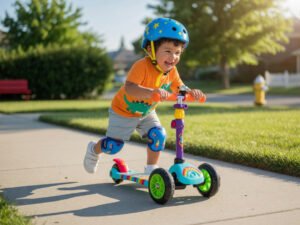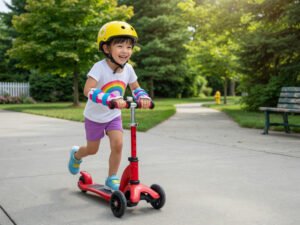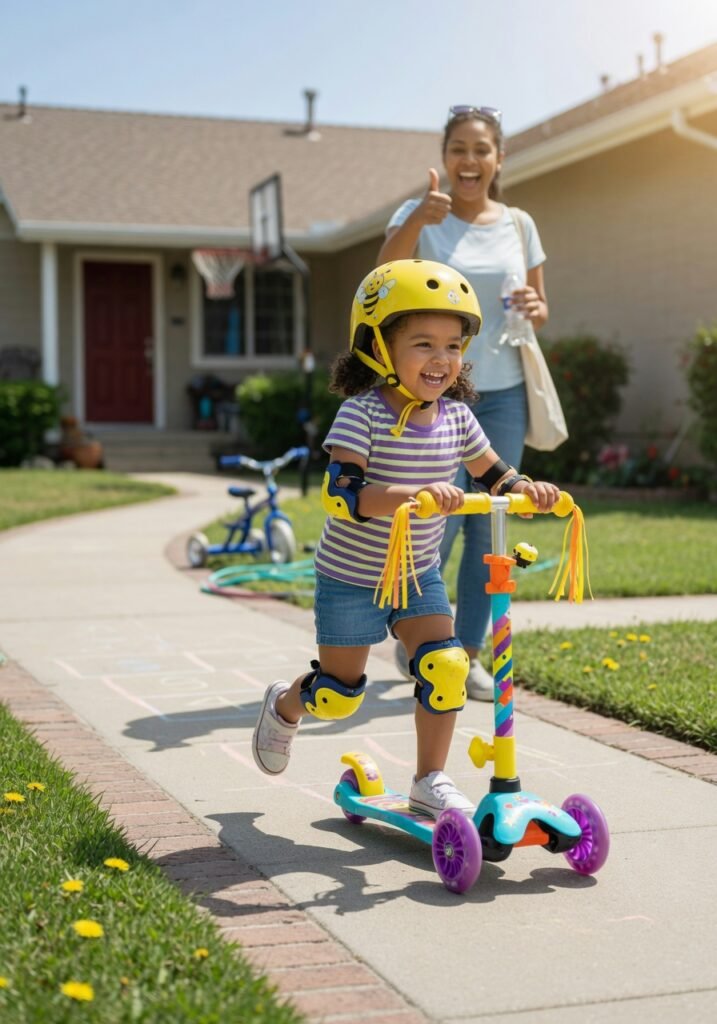

Teaching your child to learn to ride a kick scooter is one of the most rewarding outdoor adventures you can share together — and the great news is that most kids can nail the basics in just a few short sessions. With the right scooter, a little safety gear, and a simple step-by-step approach, your child will be gliding confidently down the footpath before you know it.
Kick scooters aren’t just a fun way to burn energy after school. They actively build balance, coordination, and outdoor confidence in children as young as 2 years old. According to the Outdoor Recreation Participation Report, over 40 million children across the United States ride scooters regularly, making it one of the most popular active outdoor activities for kids today.
Some of the links in this article may be affiliate links. If you make a purchase through these links, we may earn a small commission at no extra cost to you. Thank you.

Key Takeaways
- Children as young as 2–3 years old can start learning on a three-wheeled kick scooter
- A certified helmet and knee pads are non-negotiable before the very first ride
- Most kids master confident, independent riding within 3–5 practice sessions of 20–30 minutes each
- Choosing the right handlebar height and wheel size is critical to a safe and enjoyable experience
What Age Can Kids Learn to Ride a Kick Scooter?
The question every parent asks first: when is my child actually ready? The answer is probably sooner than you’d expect. Children aged 2–3 years are generally ready for a three-wheeled kick scooter, which provides extra stability while they’re still developing their balance. By age 4–5, many children transition comfortably and confidently to a standard two-wheeled model.
According to Dr. Lisa Feldman, Pediatric Occupational Therapist at the Child Development Center of America, “The motor skills required for scooting — single-leg balance, coordination, and spatial awareness — typically begin developing around age 2. Starting children early on three-wheeled models builds a natural foundation for two-wheeled riding later on.” That’s a strong case for introducing a scooter early, even if it just lives in the garage for casual play at first.
Here’s a practical breakdown to help you match the right scooter type to your child’s current stage:
| Age Range | Recommended Scooter Type | Key Skill Focus |
|---|---|---|
| 2–3 years | Three-wheeled lean-to-steer | Balance and confidence |
| 4–5 years | Two-wheeled adjustable height | Kicking, gliding, steering |
| 6–8 years | Two-wheeled performance scooter | Speed control and braking |
| 9+ years | Freestyle or commuter scooter | Tricks and distance riding |
What Safety Gear Does My Child Need Before Their First Ride?
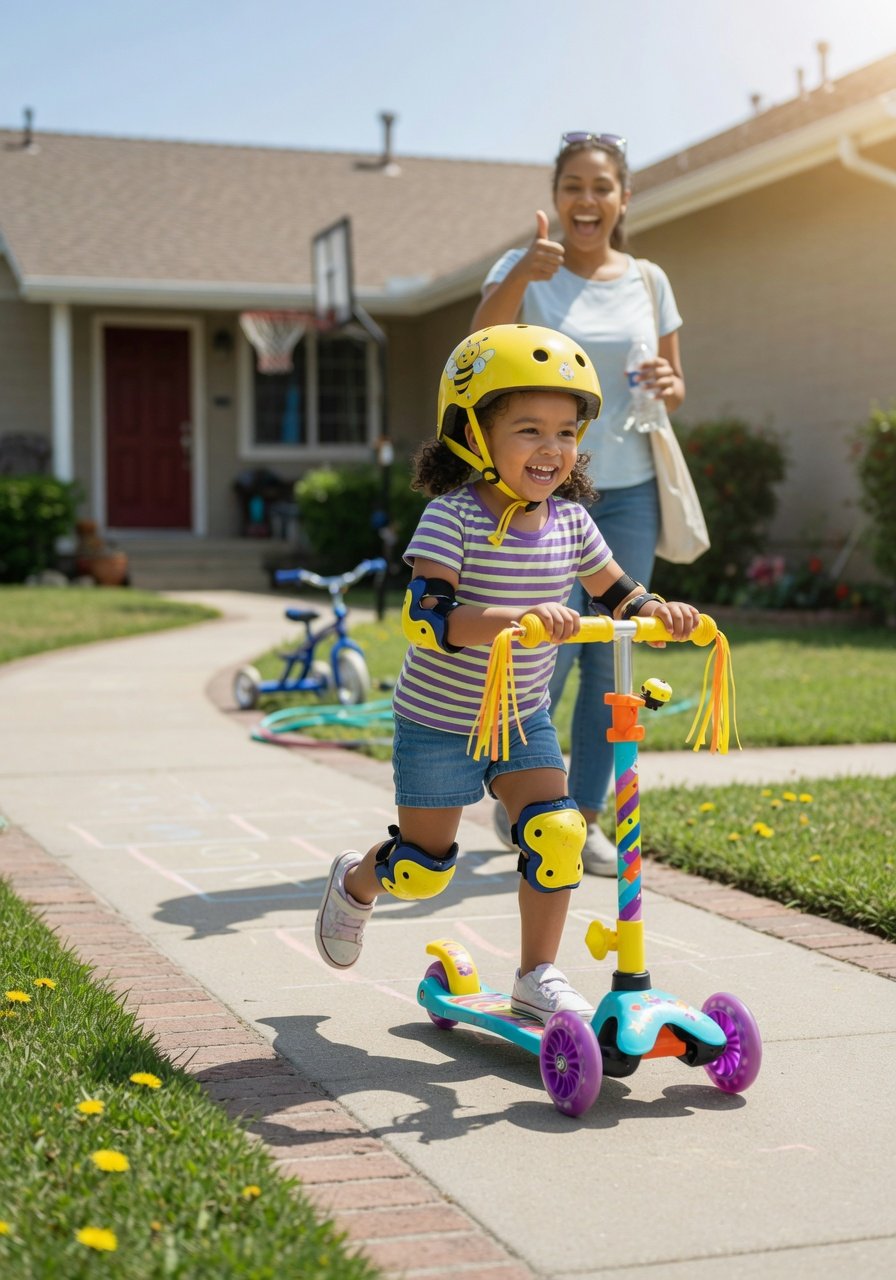
Before your child takes their first kick, safety gear is non-negotiable — full stop. According to Safe Kids Worldwide, nearly 75% of scooter-related injuries occur when children aren’t wearing any protective equipment. That’s a staggering number, and an entirely preventable one. Getting the gear sorted before ride one isn’t being overprotective; it’s just good parenting.
Here’s exactly what your child needs before stepping on a scooter for the very first time:
- Certified Bicycle Helmet — Look for CPSC (Consumer Product Safety Commission) certification on the label. The helmet should sit level on the head, two fingers above the eyebrows, with the chin strap snug enough that you can only fit one finger underneath.
- Knee Pads — Knees take the brunt of most beginner falls. Choose pads with a hard plastic cap and thick foam padding for genuine impact protection.
- Elbow Pads — Especially important for children under 5, whose fall-recovery reflexes are still maturing. Elbow pads reduce both injury risk and the fear of falling.
- Wrist Guards — Research from the American Academy of Pediatrics (2024) shows that wrist guards reduce fracture risk during falls by up to 87%. Given that the natural instinct when falling is to put hands out, this is essential gear.
- Closed-Toe Shoes with Good Grip — Never let your child ride in sandals, slip-ons, or flip-flops. Sneakers with non-slip soles provide proper foot control and protect toes if the scooter rolls over them.
“Helmets are non-negotiable, full stop. A properly fitted helmet can reduce the risk of serious head injury by up to 85 percent. It’s the single most important piece of gear your child will ever wear on wheels.”
— Dr. James Rapp, Pediatric Emergency Medicine Specialist, Children’s National Hospital
How Do I Choose the Right Kick Scooter for My Child?
Not all kick scooters are created equal, and picking the right model genuinely makes the difference between a child who loves scooting and one who gives up after the first frustrating session. A scooter that’s too tall, too heavy, or too advanced creates unnecessary obstacles that have nothing to do with your child’s ability.
Focus on these features when you’re shopping:
- Handlebar height: The bars should reach your child’s waist or hip level when they’re standing flat-footed on the deck. This posture is the most natural for balance and control.
- Adjustability: Look for scooters with multiple handlebar height settings. A 2024 survey by the Kids’ Active Play Research Group found that 68% of parents wished they’d bought an adjustable-height model from the start rather than upgrading within six months.
- Wheel size: Larger wheels (120–200mm) glide more smoothly over cracks and uneven pavement. Smaller wheels (98–110mm) offer better low-speed control — ideal for beginners who are just getting started.
- Weight capacity: Always check the manufacturer’s maximum weight rating. A scooter close to its weight limit flexes under load, which affects stability and braking performance.
- Brake type: A rear foot brake is the easiest type for young children to learn. Hand brakes are better suited to older kids who have the grip strength and coordination to use them reliably.
- Deck width: A wider deck gives beginners more room to place their standing foot confidently, which significantly improves balance during the early learning phase.
At Kids Bikes N Trikes, every scooter is selected with young riders in mind — prioritising adjustability, stability, and age-appropriate engineering so every child gets a confident and safe first experience on wheels.
How Do I Teach My Child to Balance on a Kick Scooter?
Balance is the foundation of everything. Before your child ever pushes off the ground, they need to feel comfortable simply standing on the scooter’s deck. This sounds almost too obvious — but it’s a step that many enthusiastic parents skip in the rush to get riding, and it sets the entire learning process back unnecessarily.
Start with what child movement specialists call the “static balance phase”:
- Place the scooter on a flat, smooth surface — a driveway or quiet footpath is perfect.
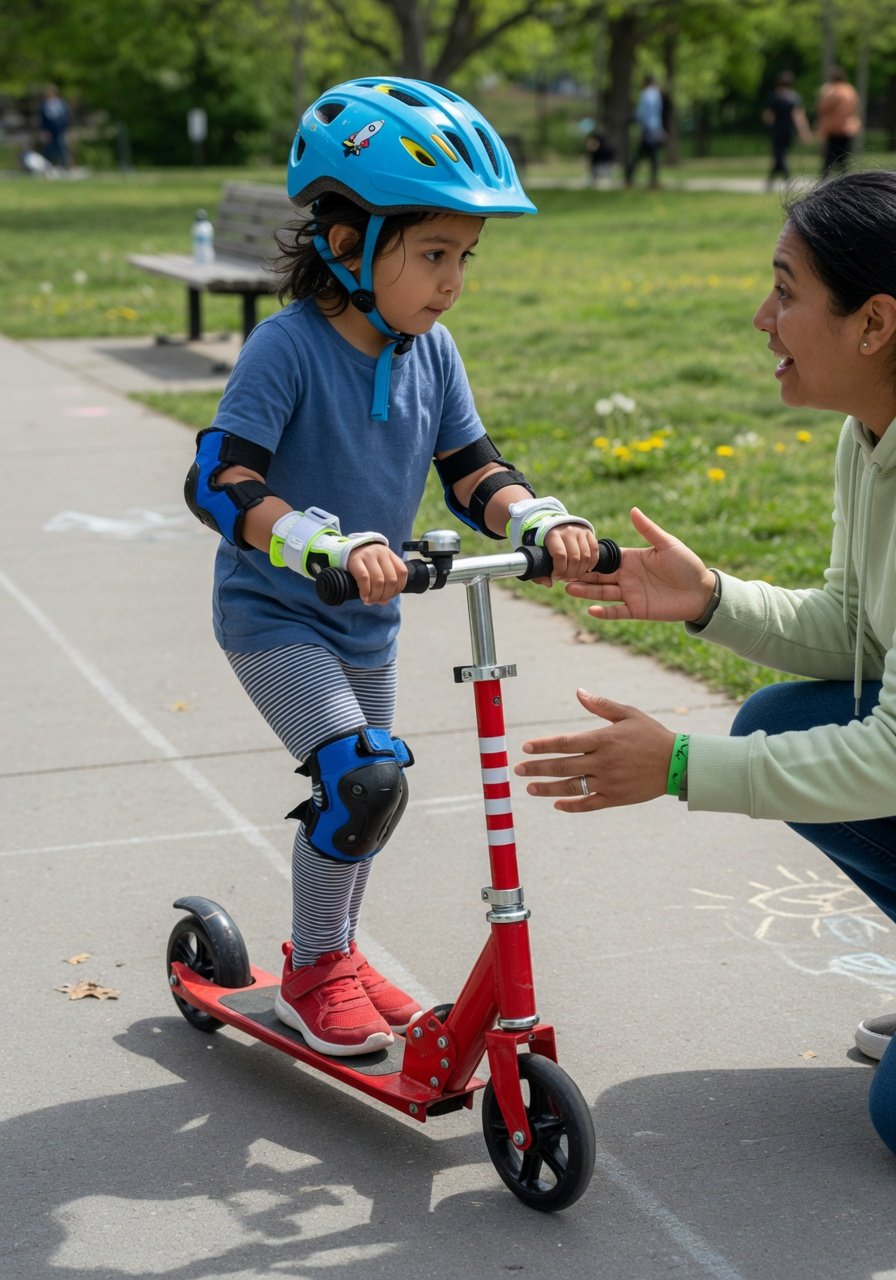
- Have your child stand with both feet on the deck and both hands on the handlebars while you hold the scooter lightly from behind.
- Allow them to rock gently side to side, getting used to the subtle movement beneath their feet.
- Encourage them to shift weight from one foot to the other — this directly mimics the motion they’ll use when kicking.
- Gradually loosen your hold as they grow more confident, releasing fully when they can stand stable for 20–30 seconds without wobbling.
Dr. Angela Torres, child movement specialist and author of Movement Matters: Active Play in Early Childhood, puts it simply: “Young children learn movement patterns best through exploration and repetition rather than verbal instruction. Let them discover the scooter at their own pace — resist the urge to narrate every step.” Most children achieve comfortable static balance within one or two 20-minute sessions, so patience is always well rewarded.
What Are the Step-by-Step Techniques for Actually Riding?
Once your child can balance on the deck without wobbling, it’s time for the part they’ve been waiting for. Breaking the riding process into clear, manageable stages makes learning to ride a kick scooter feel achievable rather than overwhelming — for both child and parent.
- Identify the dominant foot: Ask your child which foot they’d naturally kick a football with. That’s their “pushing foot.” The other foot is their “standing foot” and stays on the deck during glides.
- Practice the one-push glide: Have your child place their standing foot on the deck and push off gently with their pushing foot — just one push at a time. Let the scooter glide to a natural stop, then repeat. Do this 10–15 times until it feels smooth and unhurried.
- Build a push-glide rhythm: Once the single push glide is comfortable, introduce a two-push pattern: push, glide, push, glide. Keep it deliberate and slow at first — speed comes naturally with confidence.
- Eyes up, not down: Remind your child to look forward rather than staring at the deck. A handy trick is placing a bright sticker or favourite toy at eye level in the distance for them to focus on — it instantly improves posture and balance.
- Increase continuous pushing gradually: As confidence grows, increase the number of pushes per glide, building real momentum. By this stage, the grin on your child’s face will tell you everything you need to know.
Research from the National Alliance for Youth Sports shows that children who learn new physical skills in short, frequent sessions — rather than long marathon practices — retain those skills 40% faster than children who practise in extended, infrequent bursts.
How Do I Teach My Child to Steer and Turn Safely?
Steering a kick scooter is a little more nuanced than most parents expect. Children instinctively want to turn the handlebars sharply — like a bicycle — but on a scooter, smooth and confident turning comes from leaning with the body rather than twisting the bars aggressively.
Use these practical techniques to build steering confidence:
- Cone drills: Set up 4–6 cones (water bottles work just as well) in a gentle curve on the driveway. Have your child weave between them slowly. This builds the muscle memory for gradual, controlled turning without any scary speed involved.
- The lean method: On three-wheeled lean-to-steer scooters, demonstrate how leaning your body left turns you left, and leaning right turns you right. Encourage your child to lean with their whole torso — not just tilt their arms.
- Wide arcs before tight turns: Always start with large, sweeping turns before attempting tighter corners. Confidence in wide arcs naturally transfers to tighter turning as balance and speed control develop.
- Slow down to turn: Counter-intuitively, turning is easier to learn at lower speeds. Have your child slow down before beginning a turn — they’ll have far more time to feel the movement and make small adjustments.
How Do I Teach My Child to Brake Confidently?
Knowing how to stop is arguably more important than knowing how to go. The Consumer Product Safety Commission (CPSC) consistently reports that loss of control is the leading cause of scooter-related injuries in children under 10. Teaching effective braking from session one dramatically reduces that risk — and gives your child the confidence to ride a little faster knowing they can stop when they need to.
Most beginner scooters use a rear foot brake — a simple platform above the back wheel that your child presses down with their heel or instep. Here’s how to teach it properly:
- Introduce the brake while stationary: Before any riding happens, show your child where the brake is and let them press it with their foot while the scooter is completely still. Repeat until pressing it feels natural and automatic.
- Slow-speed stops: Have your child push off gently, glide a few feet, then apply the brake smoothly to stop. Practice this 10–15 times before moving on.
- Play the “brake!” game: Stand 10 feet ahead of your child and call “brake!” at unexpected moments during a gentle glide. This builds a fast, instinctive braking response that will serve them well as they pick up speed later.
- Gradual distance targeting: Mark a “stop line” on the path with chalk. Start by stopping within 3 feet of the line, then gradually increase their gliding speed while keeping their stops accurate.
- Address the foot-drag habit early: Teach your child that dragging their foot along the ground is not a reliable stop — it wears through shoes quickly and completely fails at any meaningful speed.
What Mistakes Do Parents Commonly Make When Teaching Kids to Scooter?
Even the most well-intentioned parents can accidentally make the learning curve steeper than it needs to be. Knowing what not to do is just as valuable as having the right technique in your toolkit.
- Skipping safety gear “just this once”: Even a gentle fall on a smooth driveway can mean a scraped palm, bruised knee, or worse — and a child who’s too nervous to try again for weeks. There’s no safe shortcut here.
- Buying the wrong scooter size: A scooter that’s too tall forces your child to reach up awkwardly; one that’s too short causes unhealthy hunching. Neither posture promotes good balance or makes for an enjoyable ride.
- Holding on for too long: It’s natural to want to support your child physically — but holding them prevents them from developing their own balance instincts. Step back earlier than feels comfortable. You’ll be surprised how quickly they adapt.
- Practising on rough or sloped surfaces too early: Cracks, gravel, grass, and inclines are advanced challenges. Start exclusively on smooth, flat, quiet ground. A garage floor or empty car park is genuinely ideal.
- Comparing to other children: According to child psychologist Dr. Sarah Jennings of the University of Melbourne, “Comparative pressure — even when well-intentioned — is one of the fastest ways to destroy a child’s motivation to try new physical skills.” Every child’s timeline is completely valid.
- Over-coaching mid-session: Too many instructions at once overwhelm young children. Stick to one simple cue per session and let the rest develop naturally. Less really is more when it comes to learning through play.
How Long Does It Take a Child to Learn to Ride a Kick Scooter?
Here’s some genuinely good news: kick scooters have one of the fastest learning curves of any wheeled activity for children. Unlike a bicycle — which requires mastering balance essentially from scratch — a scooter has a low deck and an intuitive standing position that most children adapt to very quickly.
Here’s a realistic timeline based on age and prior experience:
| Child Profile | Expected Timeline to Independent Riding |
|---|---|
| Ages 2–3 (three-wheeled scooter) | 1–2 sessions of 30 minutes each |
| Ages 4–5 (first two-wheeled scooter) | 3–5 sessions of 20–30 minutes each |
| Ages 6–8 (upgrading to new model) | 1–2 adjustment sessions |
| Child with prior balance bike experience | Often confident within a single session |
A 2023 study published in the Journal of Motor Learning and Development found that children with prior experience on ride-on toys or balance bikes mastered kick scooter riding 60% faster than those starting from scratch. If your child has already graduated from a balance bike, expect a very smooth and speedy transition.
Short, regular sessions consistently outperform long, infrequent ones. Aim for 15–25 minutes per session, ideally every 1–2 days during the initial learning phase. Children retain movement skills best when practice is frequent, fun, and finished before they get tired or frustrated.
Frequently Asked Questions
What age is best to start learning to ride a kick scooter?
Most children are ready to start learning to ride a kick scooter between ages 2 and 3, starting on a three-wheeled model for added stability. By age 4–5, many kids are ready to move onto a two-wheeled scooter. That said, readiness is more about balance and coordination than a specific birthday — follow your child’s lead rather than a strict calendar.
Do kids really need a helmet every time they ride a kick scooter?
Absolutely yes — every single time, without exception. The American Academy of Pediatrics recommends helmets for all wheeled activities, including scooting. A properly fitted, CPSC-certified helmet reduces serious head injury risk by up to 85%. Knee pads and wrist guards are also strongly recommended, especially during the learning phase when falls are most frequent.
How do I know if a scooter is the right size for my child?
When your child stands on the scooter deck in their normal shoes, the handlebars should sit somewhere between waist and hip height. If they need to hunch over or stretch up to reach the bars comfortably, the scooter isn’t the right fit. Always look for models with multiple adjustable height settings — they’re well worth the small extra investment and will save you buying a replacement scooter six months later.
What’s the best surface for a child who is just starting to learn?
Smooth, flat, and completely traffic-free is the winning combination for beginners. A quiet driveway, smooth footpath, or empty car park is genuinely ideal. Avoid rough pavement, gravel, grass, and even gentle slopes until your child is fully comfortable with both steering and braking on flat ground — those challenges should come gradually, not all at once.
My child is scared to try scooting — how do I help them feel comfortable?
Fear is completely normal and absolutely should be respected rather than rushed. Let your child spend time simply sitting on the scooter, pushing it along while they walk beside it, or watching other kids ride at the park. Keep early sessions short and relentlessly positive — celebrate every single small milestone, even just standing on the deck for ten seconds. Pushing a reluctant child almost always backfires; patience and encouragement are far more effective tools than pressure.
Should I buy a budget scooter to start with, just in case they don’t stick with it?
It’s a tempting logic, but very inexpensive scooters often have wobbly decks, stiff wheels, and unreliable brakes — all of which make learning harder and less safe. That combination is often precisely what puts children off scooting. You don’t need the most expensive model on the shelf, but choosing a reputable mid-range scooter from a trusted retailer like Kids Bikes N Trikes makes a genuine difference to both your child’s safety and their enjoyment of the whole experience.
Your Next Steps: Get Rolling This Weekend
Teaching your child to learn to ride a kick scooter is one of those parenting wins that pays dividends for years. You’re building balance, coordination, outdoor confidence, and independence — all wrapped up in something that genuinely looks and feels like pure fun.
Here’s your straightforward action plan to get started this week:
- Choose the right scooter for your child’s current age, height, and experience level — prioritise adjustable handlebars and a quality rear foot brake.
- Gather the full safety kit before ride one: certified helmet, knee pads, elbow pads, and wrist guards. Non-negotiable.
- Find your practice spot — a smooth, flat, quiet surface like a driveway, empty car park, or smooth footpath is ideal.
- Start with static balance — let your child simply stand on the deck and get comfortable before any pushing happens.
- Keep sessions short and positive — 15–25 minutes, always end on a high note, and celebrate every single milestone out loud.
- Practise consistently — every 1–2 days during the learning phase. Most children reach confident, independent riding within 1–2 weeks of regular short sessions.
Before you know it, you’ll be the one struggling to keep up on the school run — and loving every second of it.
—