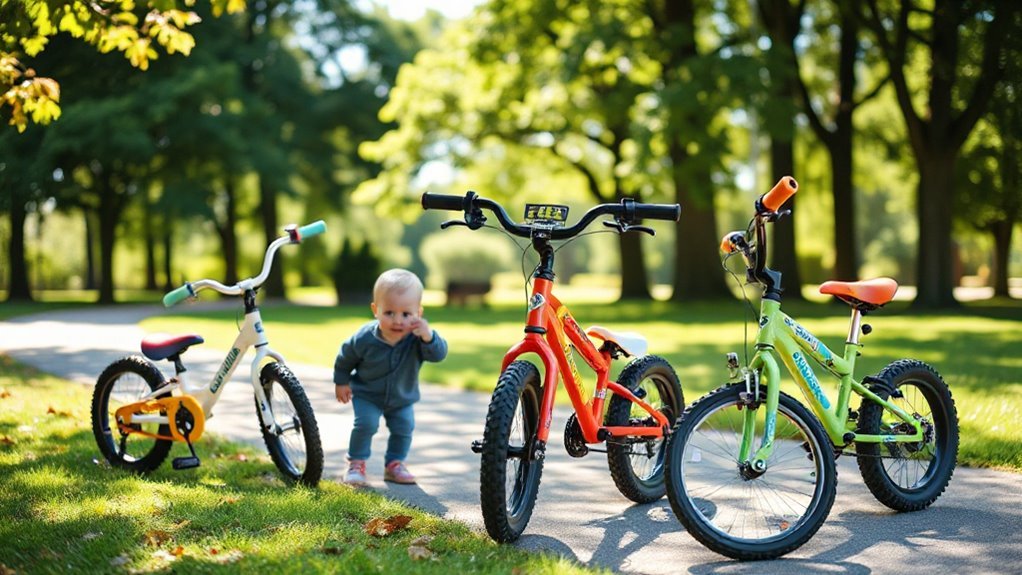

When I saw my niece teetering on a balance bike last weekend, it hit me—safe, stable, and fun are more than just catchy phrases. They’re the essentials for a toddler’s first biking experience.
I’m all in for bikes that are lightweight, adjustable, and can adapt as kids grow, whether we’re talking balance bikes or those nifty 5-in-1 trikes.
Some of the links in this article may be affiliate links. If you make a purchase through these links, we may earn a small commission at no extra cost to you. Thank you.
The right choice can turn learning to ride into a playful adventure rather than a stressful challenge.
With these ten options, there’s definitely more than meets the eye. So, are you ready to discover which one might be the perfect match for your little one? Let’s dive in!
SEREED Baby Balance Bike for Toddlers (12-24 Months, 4 Wheels)

- GROW IN FUN: Recommended ages for 12-24 months. The infant balance bike is the best birthday gift for toddlers to learn walking and riding. It helps to develop babies' balance, steering, coordination, and gain confidence at an early age.
- SAFELY RIDE: No pedal and fully widened closed wheel to avoid clamping baby's feet. 135 ° turning limit and gravity steering without leaving the ground to prevent the baby from turning over.
- STURDY & COMFORTABLE DESIGN: The mini balance bike equips sturdy aluminum alloy frame, non-slip TPU handle, and a softly supportive seat.The mini balance bike wheels are non-slip, wear-resistant and non-destructive floor, and baby can ride indoors or outdoors.
- PERFECT GIFT FOR BABIES: This baby balance bike is made of high-quality material. This ensures that they are safe for any baby. Safe design can be assured as gift for 1 year old boys and girls.
- EASY TO CARRY: With only 1.6kg (3.6 pounds) of weight, both you and your children can easily carry it around to play. Increased the children’s interest, no need to worry about the children giving up because they can’t move it without your help.
If you’re looking for a first bike that’s actually built for tiny movers, the SEREED Baby Balance Bike nails it with its 4-wheel, no-pedal design.
I’ve held onto a few kids’ toys that promised balance, but this one feels sturdy, light, and surprisingly intuitive.
At 1.6 kg, it’s easy to carry and for hands to manage, so learning walking and riding doesn’t feel scary.
The 135° turning limit and gravity steering feel like training wheels for imagination—you don’t crash, you adjust.
I think its indoor‑outdoor wear matters, and I’m not totally sure about every kid, but I’d start here.
Best For: Parents seeking a lightweight, beginner-friendly first ride-on toy for toddlers 12–24 months to promote balance and walking, usable indoors and outdoors.
Pros:
- Lightweight at 1.6 kg, making it easy for parents and toddlers to carry and maneuver.
- Sturdy aluminum frame with non-slip, wear-resistant wheels for safe indoor and outdoor use.
- No-pedal design with 4 wheels and safety features (135° turning limit and gravity steering) to help prevent tipping and clamping.
Cons:
- Limited age range (12–24 months) may require a transition to a pedal bike as children grow.
- Some kids may outgrow it quickly and seek more engaging ride-on options.
- May leave scuff marks on delicate indoor flooring if used aggressively.
SEREED Toddler Balance Bike for 2-5 Years Old (White)

- STURDY AND SAFE- What you think for your kids is what SEREED toddler balance bike have. Wide and tough carbon steel frame, supports up to 110 lbs, safe footrest pad, rubber grips, soft saddle and a 12.6 inch starting seat height, let your little one enjoy cycling at an early age!
- GROW WITH KIDS- Equipped with quick-release mechanism, parents can adjust the seat height(12.6-17.1inch) and handlebars height(19.6-22.5inch) without tools, easily adjust to the most suitable height for your child.
- WHY YOU NEED IT?- With the no pedals bicycle, child will learn balance and steering, boost self-confidence, which makes transitioning to a pedal bike much smoother. In addition, bonus plate and stickers let kids personalize their own balance bike!
- READY FOR RIDING FUN- Weighing 3.5kg (7.8 pounds), easy for boys and girls to push and pull independently. Parents will also appreciate its portability, just packing it into the car trunk and go for adventures with the little ones!
- SMOOTH RIDING- EVA foam airless tires that are noiseless, anti-slip and never go flat, ideal for all terrains. Children can freely explore outdoors or gliding indoors without scratching the floors.

This SEREED Toddler Balance Bike stands out for kids who are ready to master balance before pedaling, thanks to its no-pedal design that helps little ones focus on steering and balance first. I like that it’s light—only 7.8 pounds—so my kid can push, pull, and explore without feeling overwhelmed. The 11-inch wheels and carbon steel frame feel sturdy, and the adjustable seat and handlebars mean we don’t outgrow it overnight. It’s a breeze to assemble, and the no-brakes setup actually makes practicing safer for beginners. Overall, it’s a confident first ride that grows with them for us, really long-term.
Best For: Parents seeking a lightweight, adjustable no-pedal starter bike for 2- to 5-year-olds to learn balance before pedaling.
Pros:
- Very lightweight at 7.8 pounds, easy for kids to push, pull, and maneuver
- No-pedal design helps children focus on balance and steering first
- Adjustable seat and handlebars accommodate growing riders and different heights
Cons:
- No brakes, which may require extra supervision and alternative stopping methods
- Maximum rider weight is 110 pounds, limiting very tall/older kids
- 11-inch wheels and basic suspension may be less suitable for rough or very uneven outdoor terrain
Wdmiya Baby Balance Bike for Toddlers 12-36 Months Tiger
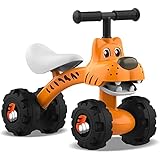
- 💨【DESIGNED FOR 12-36 MONTHS BABIES】This balance bike is specially designed for 1-2 year old toddlers, which is perfectly matched to kids' body structure.
- 💨【PARENTAL COMPANIONSHIP ALWAYS IMPORTANT】Riding a balance bike, your child will not only improve your child's balance and leg muscles, but also make the parent-child relationship more intimate.
- 💨【135° SAFTY STEERING】Handlebar rotation is limited to 135° to avoid side falling caused by excessive turning amplitude. The special front wheel design allows the bike body to sway slightly from side to side when turning.
- 💨【LET'S RIDE TOGETHER】This balance bike weights about 4lb, light but sturdy. Just need 1-2 minutes to set up this infant bicycle, comes with English manual and pic instructions.
- 💨【AFTER-SALES SERVICE GUARANTEE】If you are not satisfied with our products or have any other questions, please feel free to contact us, we will give you a satisfactory answer within 24 hours!
I think the standout feature here is the 135° safety steering that keeps little riders from oversteering and tumbling—perfect for toddlers aged 12 to 36 months. I’m impressed by its light weight—about 4 lbs—yet it’s sturdy enough for curious explorers. It’s tailored to fit kids’ bodies, with a front wheel that sways a touch on turns and a design that invites balance practice. Setup is a breeze—1 to 2 minutes—and you’ll get an English manual plus pictorial guides. We offer after-sales support too, with quick 24-hour responses if you need help. It’s a gift-ready option for birthdays or holidays, too.
Best For: This lightweight, toddler-safe balance bike is ideal for parents wanting to introduce early balance and motor skills to children aged 12–36 months with a sturdy, user-friendly design.
Pros:
- Lightweight around 4 lbs yet sturdy for curious toddlers.
- 135° safety steering to help prevent oversteering and tumbles.
- Easy 1–2 minute assembly with English manual and pictorial guides.
Cons:
- Limited to ages 12–36 months; may not suit older toddlers.
- Basic design with no mention of adjustable components.
- Some setup required (assembly), which might require caregiver time.
Baby Balance Bike for Toddlers 12-36 Months (4 Wheels, No Pedal)

- Best Gift: A toy bike Starter ride for your child, the baby balance bike is designed to help children learn the basics of balance, walking and starting to ride.
- Safety Assurance :ASTM F963-11,EN71 certification. The 135° steering limit design and fully widened closed wheels will avoid side falls or foot damage.
- Baby Friendly Design: With the bike's strong steel frame, comfortable seats and closed non-slip wheels, you can have peace of mind when guiding your baby on a bike.
- Minutes to Set Up: Baby bikes are easy to assemble, taking just a few minutes to assemble. You don't need complex or sophisticated tools at all.
- Indoor and Outdoor Use: Play has never been better! With BOBIKE blance, your child can play inside and outside the house (under your guidance). This is a fun activity for small people and adults.
Four wheels and no pedals make this Baby Balance Bike a gentle, low-pressure first ride for toddlers aged 12-36 months. I like that it’s sturdy with a strong steel frame, plus a comfy seat that actually fits small bums. It’s certified safe, which gives me peace of mind, and the 135° steering limit helps prevent nasty falls. My kid learns balance, walking, and the idea of riding without pressure. It’s easy to assemble, usually in minutes, and we can use it indoors or out, under supervision. It feels like a stepping stone toward real bikes, but softer and fun.
Best For: Parents seeking a safe, pedal-free balance ride for toddlers aged 12–36 months to learn balance and walking with indoor/outdoor use under supervision.
Pros:
- Certified safe (ASTM F963-11 and EN71), providing peace of mind for parents
- Sturdy steel frame and 135° steering limit reduce risk of falls and foot injuries
- Helps toddlers develop balance and coordination in a low-pressure, fun way
Cons:
- Suitable only for ages 12–36 months and may be outgrown quickly
- No pedals and four-wheel design may feel slow for some kids or more active toddlers
- Requires adult supervision and access to safe indoor or outdoor space for use
6V Electric Baby Balance Bike for 1 Year Olds – Blue

- Healthy growth: It is recommended to be aged 12-36 months. A balance bike is the best birthday gift for children learning to walk and ride. It helps cultivate child's' balance, turning, coordination abilities, and promote healthy growth
- Multiple pleasures: 1 car with 4 modes for multiple uses value for money 1. Sliding walking mode 2. Electric self driving mode 3. Remote brake mode 4. Bubble blowing mode
- Security Design: Multiple security designs to ensure foolproof safety, allowing parents to rest assured 1. Rotate the handlebars by a small angle to prevent the child from tipping over while sliding 2.In autonomous driving mode, the speed is controlled within 2 miles per hour 3. Parents can remotely control forward and backward movement and press the brake button in times of crisis (causing the foot pedal to malfunction)
- Beautiful and powerful: With a beautiful appearance and a variety of colors, countless children can't put it down, and it also comes with music and LED lights. We call it (Angel's Eye)
- The perfect gift: It features a secure design, multiple modes and fun, powerful functionality, stylish appearance, and cost-effectiveness. Buy 1=4. As a gift for children, who could be more suitable than it
A standout feature here is the four-mode setup that grows with your toddler, from sliding walking to electric self-driving and even remote brake control. I’ll admit, this 6V ride is designed for ages 12-48 months and makes a great birthday gift for little ones learning to walk and ride. It cultivates balance, coordination, and turning, which I actually value in development. In my experience, the autonomous mode is capped at 2 mph, so it feels safe, and the remote brake adds peace of mind. The design is cheerful, with music, LEDs, and colors, plus four modes in one purchase.
Best For: Parents seeking a versatile, four-mode toddler ride-on that grows with their child ages 12–48 months, promoting balance, coordination, and safe outdoor play.
Pros:
- Four modes in one toy: sliding walking, electric self-driving, remote brake, and bubble blowing for varied play.
- Safety features like a 2 mph autonomous cap and remote braking for peace of mind.
- Fun design with music, LED lights, and color options that appeal to kids and parents alike.
Cons:
- Limited to ages 12–48 months and may be outgrown quickly.
- Requires batteries/charging and ongoing maintenance.
- Supervision recommended for autonomous and remote modes to ensure safe use.
SEREED Baby Balance Bike for 12-24 Month Toddlers, 4-Wheel First Bike
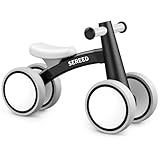
- GROW IN FUN: Recommended ages for 12-24 months. The infant balance bike is the best birthday gift for toddlers to learn walking and riding. It helps to develop babies' balance, steering, coordination, and gain confidence at an early age.
- SAFELY RIDE: No pedal and fully widened closed wheel to avoid clamping baby's feet. 135 ° turning limit and gravity steering without leaving the ground to prevent the baby from turning over.
- STURDY & COMFORTABLE DESIGN: The mini balance bike equips sturdy aluminum alloy frame, non-slip TPU handle, and a softly supportive seat.The mini balance bike wheels are non-slip, wear-resistant and non-destructive floor, and baby can ride indoors or outdoors.
- PERFECT GIFT FOR BABIES: This baby balance bike is made of high-quality material. This ensures that they are safe for any baby. Safe design can be assured as gift for 1 year old boys and girls.
- EASY TO CARRY: With only 1.6kg (3.6 pounds) of weight, both you and your children can easily carry it around to play. Increased the children’s interest, no need to worry about the children giving up because they can’t move it without your help.
For parents looking for a gentle intro to riding, the SEREED balance bike shines for 12–24 month toddlers. I like that it’s pedal-free with widened wheels, so little feet don’t clamp and stumble. That 135° turning limit and gravity steering feel safer, like training wheels that actually teach balance. With a lightweight aluminum frame and non-slip seats and grips, it’s easy to maneuver indoors or outdoors. At about 1.6kg, I don’t worry about lugging it around, and my kid stays engaged instead of getting frustrated. I think this little bike is a quietly clever gift for a first birthday.
Best For: This balance bike is ideal for 12–24 month toddlers and their parents seeking a gentle intro to riding.
Pros:
- Lightweight and portable at 1.6 kg, easy for parents to carry and for kids to handle
- Pedal-free design with widened wheels to prevent foot clamping and stumbles
- Safe indoor/outdoor use with a 135° turning limit and gravity steering
Cons:
- Limited age range; may be outgrown as the child gets older
- Four-wheel design may feel less like a traditional bike to some kids
- No pedaling practice until older, which may delay learning full cycling skills
Colorful Lighting Baby Balance Bike Toys for 1 Year Old Girl Gifts

- 【COLORFUL LIGHTING DESIGN】 To enhance children's fun, we have specially designed the colorful lighting rear wheel. No batteries are required, just spin the wheels to glow. Greatly increases the fun for children.
- 【THE BEST PARTNER FOR KIDS】 Recommended ages for 10-36 months. baby balance bike can bring fun and joy to children. It's a Great gift for toddlers to learn to walk and ride. Can help enhance the baby's balance, steering, coordination, and increase self-confidence.
- 【SAFELY RIDE】 No pedal and fully widened closed wheel to avoid clamping baby's feet. 135° steering limited to avoid side falling. NO sharp part, safer for your baby.
- 【STURDY & COMFORTABLE DESIGN】 This balance bike 1 year old is made of sturdy carbon steel, soft non-slip EVA handle, and a soft seat made of PU material. Provide your baby with a stable and comfortable riding environment, your child will enjoy the fun of riding every day.
- 【EASY TO ASSEMBLE & CARRY】 Our baby balance bike is built in Buckle design, no tools are required to install, easy to install in 3 minutes. With only 4.6lbs of weight, both you and your children can easily carry it around to play.WETIFY
This colorful lighting balance bike is a top pick for 1-year-old girls taking their first riding steps, especially if you want a toy that sparks joy without needing batteries. I love how the glow comes from the rear wheels when you spin, no cords or chargers required. Safety first matters to me, and this bike’s 135° steering limit helps little ones avoid side falls, while the wide closed wheels prevent pinched toes. Made from sturdy carbon steel with a soft EVA handle and PU seat, it stays comfy for daily play, and assembly takes minutes—no tools needed. I’d say.
Best For: Parents seeking a battery-free, safe, first-bike toy that sparks joy for 10-36 month old girls during their first riding experiences.
Pros:
- Battery-free glowing wheels that light up when spun, enhancing play without cords or chargers.
- Safety-focused design with a 135° steering limit and fully widened closed wheels to prevent pinched toes.
- Lightweight, easy to assemble (no tools) in about 3 minutes, with a comfy soft EVA handle and PU seat.
Cons:
- Primarily suited for first riding experiences; may have limited long-term use as children grow.
- No pedals, so it doesn’t teach pedaling skills or transition to a pedal bike yet.
- Glow effect depends on movement and may be less engaging in very quiet or low-energy play environments.
5-in-1 Toddler Tricycle with Push Handle, Removable Pedals, Colorful Lighting Wheels, Adjustable Seat Height & Backrest – Blue

- 5-IN-1 CONVERTIBLE DESIGN: Evolves from a baby tricycle to a pedal bike. This tricycle for toddlers 1-3 adapts to 5 stages. As a versatile toddler tricycle, it saves space and supports growth, ideal for those seeking toddler tricycles 2-4 years.
- ADJUSTABLE PARENT PUSH HANDLE: Functioning as a tricycle stroller, this push tricycle for toddlers 1-3 features a 135° rotating handle (31.89"-39.37"). It serves perfectly as a toddler tricycle with push handle, ensuring stable, anti-tip guiding.
- CUSTOMIZABLE FIT FOR KIDS: Equipped with adjustable handlebars, seat, and backrest. Unlike standard kids' tricycles, this tricycle with push handle has 3 pedal positions. A reliable toddler trike and perfect tricycle for 2 year old kids.
- STURDY AND SAFE CONSTRUCTION: Built with a carbon steel frame for indoor and outdoor use. This kids tricycle includes a 3-point harness and secure backrest. The durable trike safely supports early riders and rivals tricycles for 3-5 year olds.
- LIGHT-UP WHEELS & GIFT READY: The rear wheels illuminate while spinning, increasing visibility. Designed to develop balance, this model stands out among trikes for kids 1-3. It is a practical toddler tricycle for 1-3 year olds boys and girls.
Grown from a 5-in-1 design that grows with your kid, this in-1 Toddler Tricycle is the go-to pick if you want a single bike that lasts through several stages. I love how it evolves—from parent-led push car to independent rider. The 5-in-1 design saves money and space. With adjustable handlebars, seats, and pedals, it fits as they grow. The pedals slide to a footrest, and the backrest keeps hips comfy. A 135° pushbar gives me control, while the anti-tip keeps things steady. Colorful light wheels brighten outings, and carbon frame feels sturdy indoors. We’ll use it for years always.
Best For: Families seeking a versatile, growth-focused tricycle that lasts through multiple stages and supports safety indoors and outdoors.
Pros:
- Grows with your child through five stages (parent-led to independent rider).
- Fully adjustable handlebars, seat, and pedals for growing kids and enhanced comfort.
- Safe design with anti-tip frame and three-point harness, plus colorful light-up wheels for added fun.
Cons:
- Can be bulky or heavy to move and assemble, which may be challenging for smaller spaces.
- May be more expensive than basic tricycles or simpler push cars.
- Some parents may not need all five modes if their child only uses a subset of stages.
BoBike 5-in-1 Tricycle for Toddlers (18 Months to 5 Years) with Push Handle
No products found.
With its 5-in-1 design, the BoBike grows with your toddler from 18 months to 5 years, switching from push tricycle to balance bike and back again as needed—and that’s exactly why I think it’s a standout pick for best first bikes. I love how the carbon steel frame feels sturdy yet approachable, and that 90° steering limit keeps things from tipping over. The push handle adjusts in five heights, and the whole thing folds for trips. There’s a comfy seat with a backrest and an under-seat footrest, which makes this feel thoughtful and kid-friendly. It’s also easy to clean.
Best For: Parents of toddlers aged 18 months to 5 years who want a versatile, 5-in-1 tricycle with a push handle, adjustable height, foldability, and kid-friendly comfort features.
Pros:
- 5-in-1 design grows with your child, transitioning from push tricycle to balance bike and back for extended use.
- Adjustable, five-height push handle and foldable design for easy storage and transport.
- Sturdy carbon steel frame with a 90° steering limit plus comfortable seat with backrest and under-seat footrest for a secure ride.
Cons:
- Heavier construction may be tougher for some parents to manage or for kids to start on.
- Higher price point compared to basic trikes or balance bikes.
- Bulky size may require more storage space when not in use.
LOL-FUN Baby Balance Bike Toy 1-3 Years 4-in-1 Trike

- 4 MODES: Newly mobile toddler wants to move in as many ways as possible. LOL-FUN 4 in 1 balance bike for 1-4 years old boys girls toy, which let kids scoot or roll around, are an ideal first birthday gift on the path to pedal bikes, helping them develop strength, balance, and nerve while they learn how to steer and adjust their speed
- RELIABLE DETAILS: Balance bike for 1 year old boys girls is designed with heart. HANDLE: sawtooth thickening design, shock-absorbing. CARBON STEEL BODY: tough and 100% stable. UPGRADED WHEELS: extra big, can be used indoors & outdoors
- 1 MIN ASSEMBLY: Tricycle for toddlers 1-3 comes with a nice compact package. No small parts, no tools needed. Just press buttons to install the bike, remove the pedals and switch the back wheels into different modes
- HIGH QUALITY: LOL-FUN have always considered the importance of safety for toddlers. And this 1 year old baby tricycle is made of high-quality material. BPA free. Beautiful bright paint. The head is well-polished and 50°angle limited. Safe design can be assured as gift for 1 2 year old boys girls
- HAPPY GROWTH: We want every little one enjoy their riding. The maximum load of toddler tricycle is 66lbs. Applicable age is 10 months - 4 years old. Be sure to check the recommendation for inseam measurement
Looking for a first bike that grows with your toddler? The LOL-FUN Baby Balance Bike Toy stretches from scoot to pedal, a 4-in-1 trike that’s sturdy with a carbon steel frame, built for busy parents. It’s designed for ages 10 months to 4 years and 66 lbs, giving you room as they learn. The wheels are large, helping indoors feel like outdoors, and the 100° head angle keeps steering safe. I like that setup is quick—one-minute, no-tools assembly. Honestly, it’s a solid choice if you want versatility and peace of mind.
Best For: Parents seeking a sturdy, grow-with-toddler 4-in-1 trike that transitions from scoot to pedal.
Pros:
- Versatile 4-in-1 design (scoot, roll, balance, pedal) that adapts with your child.
- High weight capacity (up to 66 lbs) to grow with kids.
- Carbon steel frame with extra-large wheels and a 100° head angle for safer steering indoors and outdoors.
Cons:
- May be bulky for very small living spaces.
- Limited color options may not suit all preferences.
- As children grow quickly, some parents may feel it outgrows the toy sooner than expected.
Factors to Consider When Choosing a First Bike for a Toddler
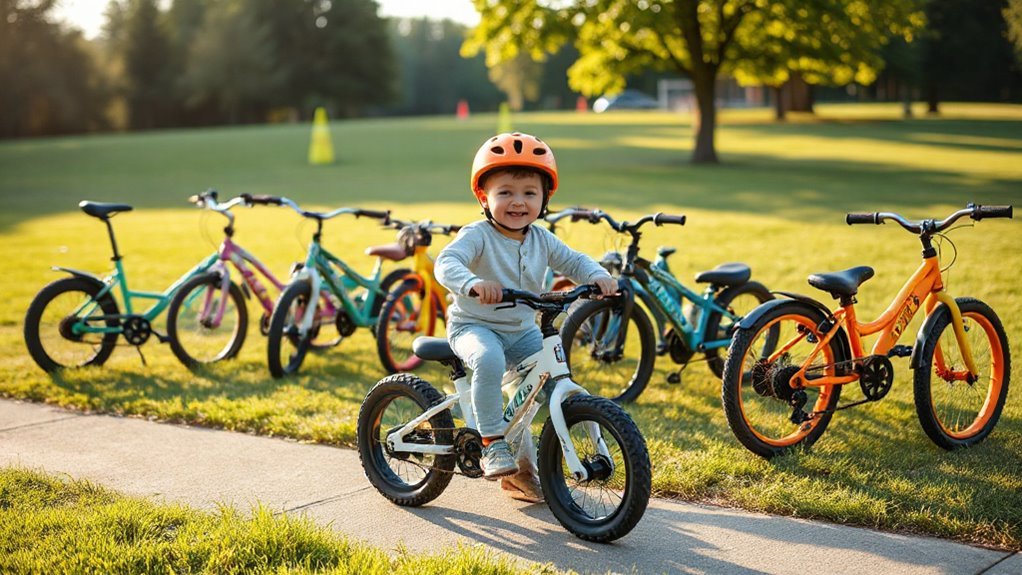
Choosing a first bike for my toddler isn’t just about cute colors, it’s about safety features, age appropriateness, and how a pedal-free design can keep little legs confident. I’ll tell you, light-weight and portable gear lets us bring it along anywhere, and it’s easier for parents and kids to handle. I think matching their balance skill level is key—we want to start easy, we’ll progress as they get steadier, and maybe that means starting with a balance bike and easing into pedals.
Safety Features
Three quick safety checkpoints stand out to me when picking a first bike for a toddler: a no-pedal design to cut down on foot clamping, a steering limit around 135 degrees to prevent wobbles and side falls, and a sturdy frame like carbon steel or aluminum that can take a tumble without quitting. In my experience, safety isn’t a single feature, it’s a system. I look for a set of non-slip, wear-resistant wheels that stay steady on wood floors or pavement. Closed wheels and a comfy seat that locks the rider in help, too. And I’m always checking the frame material—carbon steel or aluminum—because strength matters when little legs skip along. If you’re unsure, start with a model that advertises a 135° limit. today.
Age Appropriateness
Age appropriateness isn’t one-size-fits-all, and that’s why I start by sizing things up against your kid’s age and development. For 12-24 months, a no-pedal, four-wheeled setup helps them balance and feel safe as they explore steering and direction. By age 2 to 5, balance bikes become more relevant, teaching coordination without the distraction of pedals. I look at weight capacity and height too—if a bike can’t support them comfortably, learning stalls and confidence drops. In my experience, matching a bike to their current size helps them ride longer and try new moves with less fuss. The better the fit, the more natural riding feels, which is really the goal here. If you’re unsure, start with a cautious option and watch for signs of growth.
Pedal-Free Design
If you’re just getting into this, a pedal-free design can be a game changer for a toddler’s balance and confidence. I’ve found that it lets them focus on balance and coordination without the distraction of pedaling, which I think is huge. A low center of gravity and wide wheels make stability feel almost automatic, so learning doesn’t turn into a leap of faith. With a 135° steering limit, tipping feels less scary, which means more explorations and fewer freak-outs. The absence of pedals encourages them to push off with their feet, promoting natural movement and more physical activity, which I personally value. Simple, kid-friendly design helps with independence, letting them maneuver without grown-up help. In my experience, that confidence pays off in brave rides.
Weight and Portability
Weight and portability really shape how easy a toddler bike is to love. I’ve learned that lighter models—think about 3 to 8 pounds—make maneuvering feel doable for tiny hands. When a bike is portable, we can roll it to the car, stash it in a closet, or sprint to the park without dragging out a big chore. A weight of 1.6 kg (3.6 pounds) or less is especially helpful for carrying and control, boosting independence during playtime. Models that are lightweight and compact store neatly and travel nicely, which means fewer battles at the door. Look for sturdy construction that doesn’t steal the light, so durability stays high without sacrificing portability. In my experience, balance matters, but lightness wins early on for new riders.
Balance Skill Level
Lightness helps here, but balance is the real boss when you’re teaching a toddler to ride. I look at a bike’s balance skill level first, because a low center of gravity and a stable design can boost confidence as little feet learn to stay upright. Balance bikes, with no pedals, let tiny riders focus on steering and balance without pedaling chaos, and that simplicity matters. I also check the steering limit—135 degrees feels safer and easier to control as skills grow. A lightweight frame makes it easier for them to maneuver and recover after a wobble, which is exactly what learning is about. And yes, proper fit matters; feet must rest flat on the ground. I’m careful not to rush them, ever in practice.
Adjustability Range
Adjustability is where a first bike really earns its keep, because growth happens fast and a bike that grows with them saves you a lot of stress later. When I’m choosing, I look for a bike with easy, tool-free seat height adjustments so we can dial in comfort as they grow. A wide height range matters—think seats from about 12.6 inches up to 17.1 inches—to fit different toddlers and avoid outgrowing it in weeks. The handlebar should also adjust, within a range that matches a child’s height while keeping control. An adjustable bike tends to stay usable longer, which feels like a small win for your wallet and for your kid’s confidence. I’ve seen it pay off in smiles and steady, relaxed rides today.
Indoor Outdoor Use
Indoor use or outdoor use — you really want a bike that plays nicely in both worlds, and that starts with a good wheel design. I’ve learned that non-slip, wear-resistant wheels keep little riders safe whether we’re polishing the living room floor or tackling a sunlit path. A lightweight frame matters, too; it makes it easier for me to carry it between rooms and for my kid to maneuver it without turning into a wheeled obstacle course. Indoors, a smaller turning radius helps avoid crashes; outdoors, a tougher build handles bumps a bit better. Seat comfort and adjustability matter for longer sessions outside, but indoor riding benefits from quick, easy access. Versatility across surfaces is the name of the game for little adventures daily.
Setup Ease
When I’m shopping for a toddler bike, setup ease matters as much as anything else, because a complicated assembly can turn a brand-new ride into a bedtime feud. I look for bikes that come together in under 15 minutes, with simple instructions or even pictorial guides that you can actually follow without a manual marathon. Lighter models win here, too—easier to lift, carry, and get into the final riding pose without drama. I prefer no fiddly parts or secret mechanisms that stall the process, and I’m drawn to snap-together designs that feel like a shortcut rather than a hurdle. In my experience, less chaos at setup means more smiles after the bell rings. That ease lets kids learn faster and parents breathe easier today.
Conclusion
When it comes to picking out that first bike for your little one, think of it like giving them a little passport to adventure. You definitely want safety and comfort to be at the top of your list, followed closely by fun and that sweet feeling of independence. I’d recommend going for something lightweight and sturdy—balance bikes or a versatile 4-in-1 trike are great options to kick things off. Remember, mastering balance comes before pedaling, and if the bike fits them well now, it’ll grow alongside their skills.
So, if you’re on the fence about which bike to grab, I’d say go for it! Investing in a quality first bike not only sets them on the right path but also opens the door to countless outdoor adventures together. Patience is key, and believe me, the joy you’ll share as they hit those milestones is priceless. Don’t wait—get that bike and watch the smiles unfold!
Last update on 2026-10-13 / Affiliate links / Images from Amazon Product Advertising API