
Alright, if you’re looking to get your 2-year-old spinning with joy, I’d suggest checking out options like the BAUTIA 4-in-1 tricycle, it’s super versatile, easy to switch modes without tools, and built for comfort and stability.
Then there’s the KRIDDO tricycle, wide wheels, strong frame, perfect for wobbling beginners.
Some of the links in this article may be affiliate links. If you make a purchase through these links, we may earn a small commission at no extra cost to you. Thank you.

If style and storage matter, the Fisher-Price Harley trike is pretty cool, and the Radio Flyer Red Rider stays timeless.
Oh, and the Scoot 2 Kids, great for indoor and outdoor adventures.
Stick around, and I’ll show you why these are your best bets.
| BAUTIA 4-in-1 Toddler Tricycle and Balance Bike |  | Versatile 4-in-1 | Age Range: 10 months to 4 years | Number of Wheels: 3 | Indoor/Outdoor Use: Yes | VIEW LATEST PRICE | Read Our Analysis |
| KRIDDO Toddler Tricycle for Ages 2-4 |  | Safe & Durable | Age Range: 24 months to 5 years | Number of Wheels: 3 | Indoor/Outdoor Use: Yes | VIEW LATEST PRICE | Read Our Analysis |
| Radio Flyer Red Rider Trike for Toddlers | 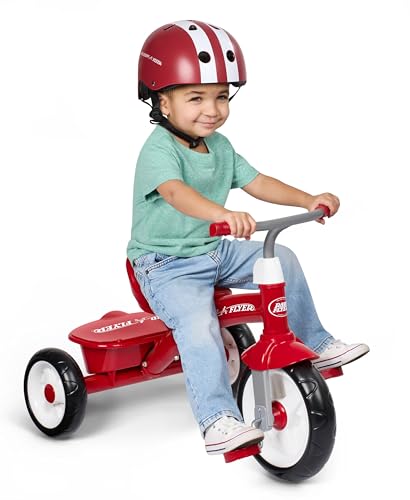 | Classic Ride | Age Range: 2.5 to 5 years | Number of Wheels: 3 | Indoor/Outdoor Use: Yes | VIEW LATEST PRICE | Read Our Analysis |
| Fisher-Price Harley-Davidson Toddler Tricycle with Storage | 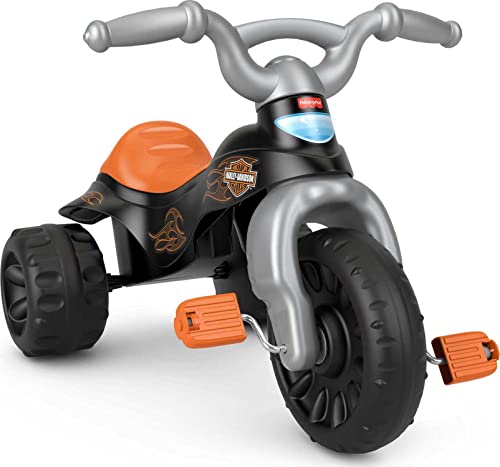 | Fun & Sturdy | Age Range: 2 to 5 years | Number of Wheels: 3 | Indoor/Outdoor Use: Yes | VIEW LATEST PRICE | Read Our Analysis |
| Radio Flyer Scoot 2 Kids Scooter (Ages 1-4) | 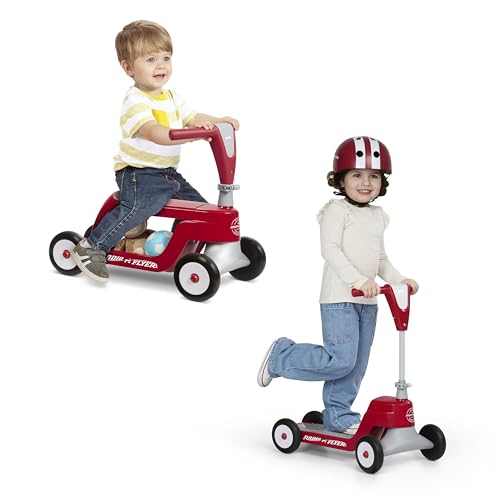 | Grow-with-Child | Age Range: 1 to 4 years | Number of Wheels: 4 | Indoor/Outdoor Use: Yes | VIEW LATEST PRICE | Read Our Analysis |
More Details on Our Top Picks
BAUTIA 4-in-1 Toddler Tricycle and Balance Bike
If you’re on the hunt for a kid’s tricycle that actually scores high on versatility, the BAUTIA 4-in-1 Toddler Tricycle and Balance Bike is pretty much your new best friend.
Honestly, this thing is like the Swiss Army knife of toddler toys. It switches from a baby walker to a tricycle, then a balance bike, and finally a toddler bike—pretty clever, right? You just snap a few pieces without tools, switch the rear wheels, and you’re good to go. All the while, it’s built with sturdy carbon steel and EVA foam wheels, so you don’t have to worry about the kiddo knocking it into the furniture or driveway.
- Age Range:10 months to 4 years
- Number of Wheels:3
- Indoor/Outdoor Use:Yes
- Safety Features:Safety limiters, non-slip pedals
- Adjustable Components:Rear wheels and pedals
- Storage/Carrying:Yes, under seat
- Additional Feature:Quick tool-free mode switching
- Additional Feature:Shockproof, silent EVA wheels
- Additional Feature:Supports up to 66 lbs
KRIDDO Toddler Tricycle for Ages 2-4
Looking for a tricycle that’s as safe and durable as it is adorable? Well, the KRIDDO Toddler Tricycle might just be your new best friend. It’s designed for kids between 2 and 4, so your toddler can grow into it—kind of like a favorite pair of shoes that actually fits for years. The triangular design and wider wheels make tipping pretty much impossible, which is a relief if your kid’s wobbling stage is still ongoing. Plus, it’s made from BPA-free, non-toxic materials—so it’s safe enough for anyone who worries about what little hands might chew on. Basically, it’s sturdy, comfy, and easy to assemble—what more could you ask for?
- Age Range:24 months to 5 years
- Number of Wheels:3
- Indoor/Outdoor Use:Yes
- Safety Features:Wide wheelbase, non-slip grips
- Adjustable Components:Adjustable seat and handlebars
- Storage/Carrying:No
- Additional Feature:Extended rear triangle design
- Additional Feature:Adjustable seat and grips
- Additional Feature:Supports up to 55 lbs
Radio Flyer Red Rider Trike for Toddlers
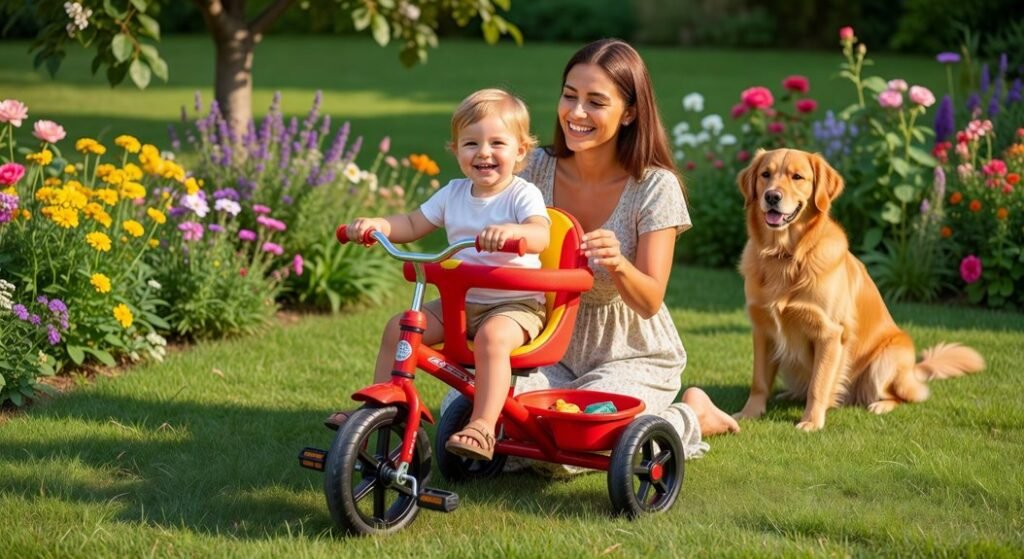
Alright, if you’re hunting for a classic ride that’s as reliable as your favorite old jean jacket, the Radio Flyer Red Rider Trike just might be it. We’re talking about a tricycle made for kids ages 2.5 to 5—perfect for when they’re just starting to pedal. It’s got this sturdy steel frame that’s probably seen more rides than I’ve had hot dinners, and the quiet tires make for a smooth cruise on sidewalks, driveways, or even a patio if you’re feeling fancy. And don’t worry about growth spurts—its adjustable seat will keep them riding comfortably. Honestly, I’d call this one a timeless keeper.
- Age Range:2.5 to 5 years
- Number of Wheels:3
- Indoor/Outdoor Use:Yes
- Safety Features:Stable wheels, durable frame
- Adjustable Components:Adjustable seat height
- Storage/Carrying:Yes, under seat
- Additional Feature:Classic red design
- Additional Feature:Adjustable seat height
- Additional Feature:Includes a storage bin
Fisher-Price Harley-Davidson Toddler Tricycle with Storage
Ever seen a toddler’s eyes light up when they hop onto something fun and sturdy? Yeah, I’m sure you have — those moments are classics. The Fisher-Price Harley-Davidson Toddler Tricycle with Storage is no exception. It’s got that cool Harley look, complete with rugged tires to handle “off-road” adventures you didn’t even know your yard could host. The sturdy frame, wide wheelbase, and easy-grip handlebars are built for stability, and the secret storage compartment? Genius for stroking snacks or tiny treasures. Honestly, I love how it combines style, durability, and practicality — because let’s face it, a kid-powered bike that looks this cool and actually supports motor skills? That’s a win.
- Age Range:2 to 5 years
- Number of Wheels:3
- Indoor/Outdoor Use:Yes
- Safety Features:Wide wheel base, easy-grip handlebars
- Adjustable Components:Not specified
- Storage/Carrying:Yes, under seat
- Additional Feature:Off-road rugged treads
- Additional Feature:Hidden under-seat storage
- Additional Feature:No assembly required
Radio Flyer Scoot 2 Kids Scooter (Ages 1-4)
So, here’s the scoop: the Radio Flyer Scoot 2 Kids Scooter is basically your toddler’s first “grow-with-child” ride that’s clever enough to keep up as they get taller and more confident. You start as a comfy seated ride-on, which is great for initial balance, then just flip the deck without tools—seriously, no screwdriver chaos—to turn it into a four-wheel scooter. I mean, how handy is that? It’s sturdy, with a durable frame and adjustable handlebars so it really grows with your kid. Plus, it has under-seat toy storage—something I’m sure our kids will love—making it a solid, versatile choice for backyard, sidewalk, or neighborhood adventures.
- Age Range:1 to 4 years
- Number of Wheels:4
- Indoor/Outdoor Use:Yes
- Safety Features:Stable 4-wheel base, non-slip deck
- Adjustable Components:Adjustable handlebar height
- Storage/Carrying:Yes, under seat
- Additional Feature:Converts from ride-on to scooter
- Additional Feature:Under-seat toy storage
- Additional Feature:Adjustable handlebar height
Factors to Consider When Choosing Tricycles for 2 Year Olds
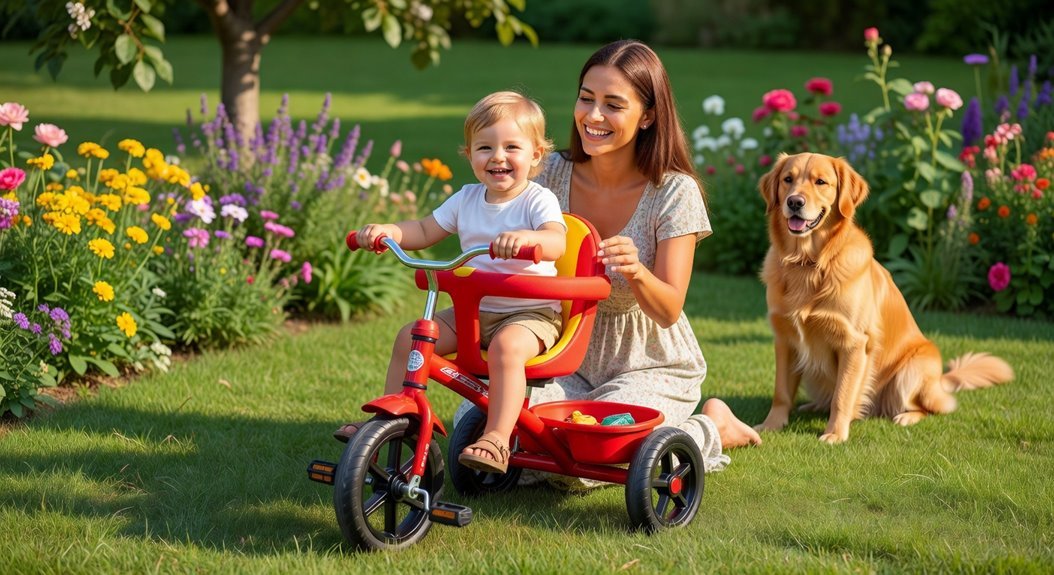
All right, so when you’re picking out a tricycle for your little, and I mean little, like two-year-olds are tiny but mighty, you want to make sure it’s age-appropriate, no point in giving a kid a toy meant for an 8-year-old. Safety features are obviously key, because toddlers aren’t exactly known for their cautious nature, and I swear durability is like choosing a good pair of shoes, if it falls apart after a few rides, what’s the point?
Finally, comfort and ease of assembly are the unsung heroes here, if I can’t put it together without a PhD or my spouse’s help, it’s probably not worth it, plus, no one wants a tricycle that leaves a trail of parts behind.
Age Appropriateness
You might be wondering what makes a tricycle truly right for your 2-year-old, and honestly, it’s a bit like picking a pair of shoes—you want something that fits now and still makes sense later. I’m sure you’ve seen those tiny bikes with big wheels and thought, “Will this last?” That’s why, for 2-year-olds, look for models labeled 24–36 months or up to 3 years. They’re designed to match early mobility development without overwhelming your kid. All right, stability matters, so a 3-wheel design with a low seat is best — think toddler-friendly terrain. And don’t forget adjustable features; they grow fast, and so should their tricycle. Honestly, weight limits are a good guide, typically 25–55 lbs, which covers a lot of growth.
Safety Features
Ever wonder what safety features on a tricycle really matter when your 2-year-old is just learning how to pedal and balance? I’m sure you’ve noticed that little bodies are wobbly, and it’s like trying to herd cats sometimes. Look for a sturdy frame and wide, stable wheels—think of it like a mini tank, but cuter. Make sure it can handle roughly 40-55 pounds, so it grows with them without risking a tip-over. Non-slip pedals and textured grips are a must, because slipping off the pedals is pretty much guaranteed during those early pedal adventures. Check for low centers of gravity and limited wheel rotation, which keep rollover probabilities manageable—kind of like how a good safety net works. Oh, and obviously, BPA-free and non-toxic paints matter—because your kid’s not a tiny lab rat.
Material Durability
Wondering what kind of materials hold up best under a 2-year-old’s unpredictable energy? We’ve all seen little ones zoom around like tiny tornadoes, so durability’s key. I mean, look for frames made from sturdy stuff like carbon steel, those are the muscle cars of tricycles—they just don’t quit, even as your kid grows or crashes into stuff.
All right, don’t forget about pedals and grips, durable, non-slip ones are a must, because slipping during a foot-plant moment is a rookie mistake. Wheels made from EVA foam are pretty much the workhorse in quiet indoor/outdoor rides, and they don’t explode into shreds after a couple of rough crossings. And don’t forget, a good load capacity, say around 66 pounds, means your kid’s not outgrowing their ride anytime soon, boosts safety and saves money.
Ease of Assembly
All right, let’s talk about something that can feel like trying to assemble Ikea furniture blindfolded, ease of assembly. You’ve probably noticed, some tricycles are built for speed, no tools, snap-in parts, quick transitions from walker to pedal mode. Basically, these are the secret weapons for busy parents, since many promise set-up under 30 minutes, which I think is a miracle. I mean, who’s got the patience for complicated instructions or tiny screws? Some models even let you switch wheels or remove pedals with just a button push, no sweating over it. Plus, adjustable features like seat and handlebar heights make the whole process even easier. Honestly, if a tricycle’s a breeze to put together, it’s probably worth a few extra bucks.
Comfort and Fit
Alright, let’s talk about what makes a tricycle comfortable because honestly, it’s more than just a soft seat and some handlebars. You want an adjustable seat that can grow with your kid, because who knows if they’ll be 2, 3, or somehow still fitting in it at 4. A soft, non-slip grip on the handlebars makes those tiny hands feel secure, not like they’re trying to hang onto a flagpole. I mean, a low, stable center of gravity and a wide wheelbase, that’s just common sense—less tipping, more cruising, especially on varied surfaces. Padded seats and ergonomic pedals make longer rides less torture and more fun. And forget loud squeaky wheels, smooth, shock-absorbing ones are the real MVPs for indoor or outdoor adventures.
Versatility Options
Have you ever tried juggling tools in a workshop, yeah, it’s kind of like choosing a tricycle, what looks simple at first quickly turns into a balancing act. You want options that grow with your kid, right? So, look for models with multiple modes—think baby walker, pedal trike, balance bike, and toddler bike—all rolled into one. I mean, who doesn’t want a toy that turns into something else faster than you can say “transition speed bump”? The rear wheels should shift or pedals come off easily, no tool kit required, just some quick magic. Favor designs with limited front wheel rotation, about 100°, to help steer and avoid tumbleweed-style rollovers. All this makes a trike that’s more of a lifelong companion, not just a “for now” toy.
This versatile solution is ideal for parents seeking a durable, adaptable growth-stage trike that transitions from infant to toddler to independent rider. Features include modular frame, seamless mode conversion, tool-free wheel and pedal adjustments, and a high-traction walk-and-run mode. With a compact footprint and stability-focused geometry, it supports safe hand-off learning, confidence-building practice, and long-term play value. Invest in a kid’s mobility system that delivers incremental performance upgrades, multi-age compatibility, and dependable safety, ensuring a trusted companion from first steps to full-speed ride.
Budget Considerations
Budget Considerations
When you’re shopping for a tricycle for your 2-year-old, money definitely shapes the choices you make. I’m sure you’ve noticed that prices swing wildly — from budget-friendly to “wait, that’s a small car?” So, you gotta set a budget first. Then, compare features like safety standards, durability, and whether the thing can grow with your kid. All right, some pricier models boast steel frames and longer warranties, which sounds nice but might be overkill if you’re just testing the waters. Budget options tend to be simpler, with fewer adjustable parts, but hey, they’ll get the job done for a while. Just keep an eye on load limits — or your kid might be riding a mini tugboat.
In the modern marketplace, align your budget with essential safety certifications, robust construction, and scalable design to maximize long-term value. Look for models with reinforced frames, adjustable seats, and dynamic pedal systems that adapt as your child grows, ensuring continued use beyond the toddler stage. Prioritize reputable brands offering solid warranties and customer support, and compare price points that include shipping, assembly, and safety accessories. By choosing a budget-conscious option that delivers reliability and growth potential, you secure a durable, kid-friendly investment that supports early mobility and family fun today.
Frequently Asked Questions
Are Tricycles Suitable for Indoor Use?
Yes, tricycles are suitable for indoor use, but it depends on your space. Did you know the average living room is about 300 square feet? That’s enough for a small, lightweight trike—think compact and quiet, like a little motorbike. I mean, we’ve tried it, and it’s perfect for quick energy burns before bath time. Just beware of sharp turns, furniture and little accidents can happen!
Yes, tricycles for indoor use are a smart solution for energy management, space-conscious homes, and kid-friendly play areas. With a compact, quiet design and lightweight frame, these indoor tricycles offer safe, low-noise operation, ideal for 300-square-foot living rooms or multi-purpose playrooms. Targeted benefits include improved motor skills, reduced screen time, and convenient, on-demand activity that fits into busy families’ routines.
Product-ready guidance for buyers: select an indoor-appropriate tricycle with a low-profile seat, soft-grip handlebars, non-slip pedals, and rounded furniture guards. Look for a compact footprint, durable construction, and quiet, smooth-rolling wheels to minimize disruption in apartments or open-plan living spaces. Pair with age-appropriate wheels and adjustable handlebars to ensure a secure fit as your child grows, maximizing value and usability.
How Long Do Toddler Tricycles Typically Last?
Toddler tricycles typically last around 1 to 3 years, potentially longer if your kid treats it as a prized possession. It depends a lot on build quality, how rough your little one is, and how often they ride. Our example survived a few minor crashes, but it’s not indestructible. Think of it like a durable pair of shoes; they may last longer with proper care.
Maximize lifespan with high-quality frames, reinforced wheels, and adjustable components designed for growing kids. When selecting a model, prioritize sturdy steel or aluminum construction, reliable brakes, and a wide wheelbase for stability. Regular maintenance and timely replacement of worn parts can extend usability, letting your child grow into the tricycle and enjoy years of use.
If you’re shopping now, look for kid-friendly safety features, easily adjustable handlebars and seat, and a weight rating that matches your child’s current size plus growth. This approach delivers a longer-lasting investment, reduces the need for frequent replacements, and supports a smooth transition to bigger ride-on options as your child develops.
Can Toddlers Independently Learn to Ride?
Absolutely, toddlers can learn to ride independently, but it’s more about their confidence and coordination than age. I mean, some pick it up in days; others take weeks, and honestly, it depends on the kid—like trying to teach a cat to fetch. All right, you gotta give them time and a little patience. We’ve seen two-year-olds ride on their own; it’s surprisingly adorable and a bit chaotic.
Absolutely, toddlers can learn to ride independently, but it’s more about their confidence and coordination than age. I mean, some pick it up in days; others take weeks, and honestly, it depends on the kid—like trying to teach a cat to fetch. All right, you gotta give them time and a little patience. We’ve seen two-year-olds ride on their own; it’s surprisingly adorable and a bit chaotic.
What Safety Gear Is Recommended?
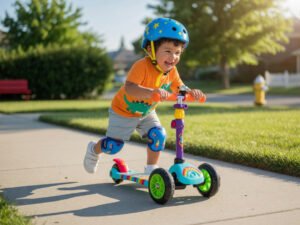
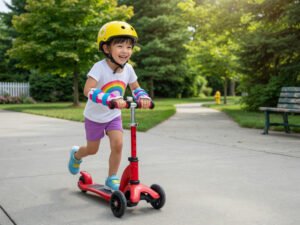
You definitely want a helmet, knee pads, and maybe elbow pads, think of it like body armor for tiny adventurers. All right, maybe not full-on combat gear, but safety’s no joke; falls happen faster than you can say “speed bump.” I mean, I swear my kid’s helmet’s seen more action than my old skateboard. Keep it snug, and you’re golden. Better safe than tiny, scraped-up knees, right?
You definitely want a helmet, knee pads, and maybe elbow pads, think of it like body armor for tiny adventurers. All right, maybe not full-on combat gear, but safety’s no joke; falls happen faster than you can say “speed bump.” I mean, I swear my kid’s helmet’s seen more action than my old skateboard. Keep it snug, and you’re golden. Better safe than tiny, scraped-up knees, right?
Are There Eco-Friendly Tricycle Options Available?
Yes, eco-friendly options are out there, and you should definitely consider them. You’ll find tricycles made from recycled plastics, sustainably sourced wood, or non-toxic, biodegradable paints. I mean, it’s not necessarily mainstream yet, but brands focused on sustainability are popping up, and they’re pretty committed. Honestly, I’d pick one that balances durability with eco-consciousness. Sure, they might cost a tad more, but it’s like planting a tiny tree on your kid’s behalf.
Yes, eco-friendly tricycles exist, and you should prioritize them in your purchase decision. Look for models built from recycled plastics, responsibly harvested wood, and finishes with non-toxic, biodegradable paints to ensure long-lasting performance and environmental stewardship. While mainstream availability is growing, select brands dedicated to sustainability are expanding rapidly and delivering proven durability. I recommend choosing a solution that pairs ruggedness with eco-conscious materials to maximize value over time. Although the upfront price may be slightly higher, you’ll gain lasting performance and the feel of investing in a healthier planet for your family.