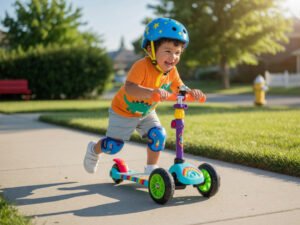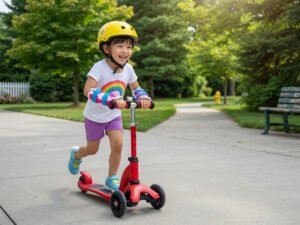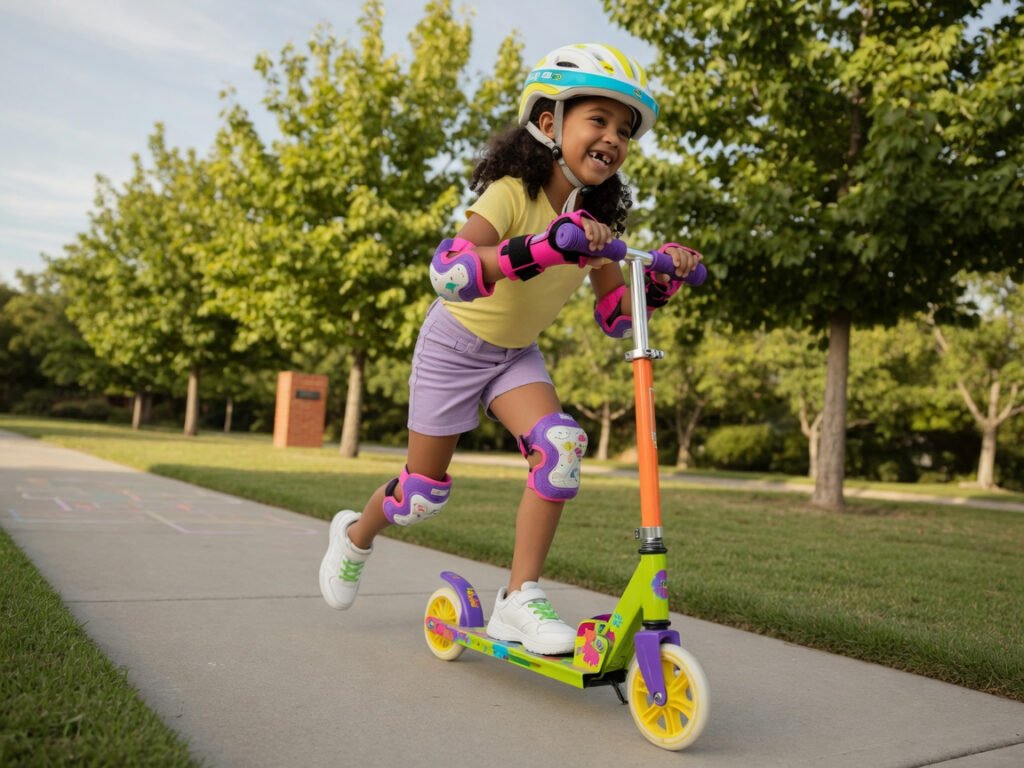

Kick scooters are genuinely fun — but they’re not risk-free. Research consistently shows that around 40% of kick scooter accidents involve head injuries, and emergency room visits for scooter-related incidents have doubled in urban areas over the last decade. The good news: with the right gear, a quick pre-ride routine, and solid habits from day one, the vast majority of those injuries are entirely preventable.
📋 Key Findings at a Glance
- ~40% of kick scooter accidents result in head injuries — making a certified helmet the single most important piece of safety kit.
- Wrist and arm fractures are the most common physical injuries, caused by falling on outstretched hands.
- Emergency room visits for scooter injuries have doubled in urban areas over the last decade as ridership surged without matching safety education.
- Correctly fitted protective gear can reduce the risk of serious injury by up to 85%, according to micro-mobility safety research.
What Do Kick Scooter Accident Statistics Actually Show?
Kick scooter use has grown dramatically over the past decade, and injury data has kept pace. Emergency department studies across the UK, US, and Europe consistently document a rise in scooter-related incidents that tracks closely with increased ridership. In urban areas specifically, ER visits linked to kick scooter accidents have doubled over the last decade — a pattern driven by more people riding, often without adequate safety knowledge or equipment.
Some of the links in this article may be affiliate links. If you make a purchase through these links, we may earn a small commission at no extra cost to you. Thank you.

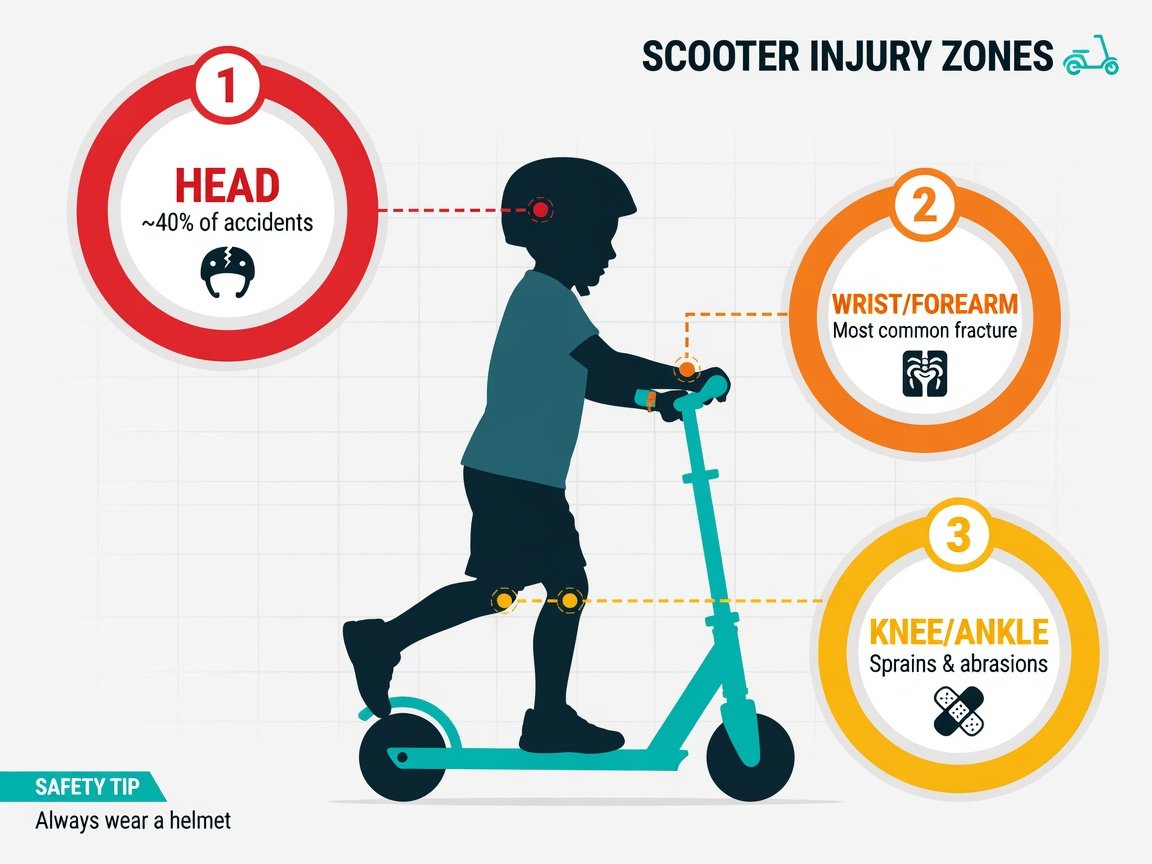
The breakdown of injuries is sobering. Head injuries dominate the data, accounting for roughly 40% of all kick scooter accident cases — a figure that spans mild concussions through to severe traumatic brain injuries. The majority of serious cases involve riders who were not wearing a helmet at the time of the fall. Fractures, particularly to the wrists, forearms, and collarbones, account for another significant share, followed by ligament sprains, contusions, and lacerations.
Location matters too. Over 60% of reported scooter incidents occur on roads and footpaths — shared-use environments where riders navigate pedestrians, vehicles, and unpredictable surface conditions simultaneously. Dedicated cycle and scooter infrastructure reduces this risk significantly, but the reality for most riders in 2026 is mixed-use spaces with no formal separation from other road users.
What Are the Most Common Kick Scooter Injuries?
Falls are behind the great majority of kick scooter injuries, and the body’s instinctive response to a fall — throwing both arms out to catch yourself — is precisely what causes the most common fractures. Distal radius fractures (broken wrists) are the single most frequently reported bone injury in scooter riders of all ages. The impact force travels straight up through the outstretched arm, and the wrist bears the brunt of it.
Ankle and knee sprains follow closely. An awkward landing after clipping a kerb, or a foot sliding off the deck mid-kick, can hyperextend the ankle or torque the knee joint in ways that damage ligaments. These soft-tissue injuries are often underestimated because they don’t show on X-rays — but a moderate ankle sprain can keep a child off their feet for two to three weeks and often recurs if not rehabilitated properly.
Abrasions and lacerations — the road rash from sliding along tarmac — are nearly universal in unprotected falls. While rarely serious medically, open wounds on knees and elbows are painful, prone to infection, and slow to heal on active children. Protective pads are not glamorous, but they genuinely change the day-to-day experience of learning to ride and recovering from small spills.
Why Are Head Injuries Such a Serious Risk on Kick Scooters?
It might seem counterintuitive — kick scooters sit low to the ground, so how bad can a fall be? The reality is that their low centre of gravity can actually produce more abrupt, unpredictable falls than a bicycle. When the front wheel catches a crack in the pavement or rides over a loose stone, riders tip forward quickly with very little time to react before the head is heading for the ground.
Children face a compounded risk. Their heads are proportionally larger and heavier relative to their bodies, which increases the rotational momentum during a forward fall. Research in paediatric injury prevention shows that unhelmeted children are three to four times more likely to sustain a traumatic brain injury in a scooter fall compared to those wearing an approved helmet.
The case for helmets is one of the most robust in child safety research. Studies consistently show that a correctly fitted helmet reduces the risk of serious head injury by up to 85%. That’s not a marginal gain — it’s the difference between a headache and a hospital admission. In 2026, with MIPS-equipped helmets available at mid-market price points, there is very little justification for skipping one.
Which Age Groups Face the Highest Risk from Kick Scooter Accidents?
Children between the ages of 5 and 14 account for the largest proportion of kick scooter-related ER visits. This group rides most frequently, often in higher-traffic environments, and is still developing the balance, spatial awareness, and hazard perception needed for truly safe independent riding. The combination of enthusiasm and developing judgement is a risk factor in itself.
Younger children — under 5 — typically ride with close parental supervision and at lower speeds, which reduces injury risk substantially. When a toddler or preschooler does fall, it’s usually a simple low-speed balance spill rather than a collision. For this youngest group, scooter design makes a meaningful difference: a well-matched mini kick scooter for young children — one with a low deck, wide wheelbase, and smooth foot brake — significantly reduces fall frequency during the learning phase.
Older children and teenagers face a different risk profile entirely. They ride faster, take more risks, and are far more likely to ride in active traffic or attempt tricks before their reaction times are up to it. Adult riders — particularly users of shared rental scooters in city centres — have seen a notable increase in injury rates as urban scooter schemes have expanded. The safety principles remain constant across all age groups; the execution just scales to match the environment and speed.
What Actually Causes Most Kick Scooter Accidents?
Kick scooter accidents cluster into three categories: equipment failures, environmental hazards, and rider behaviour. Understanding which is most relevant to your child’s situation helps you target the right preventive steps rather than trying to do everything at once.
Equipment failures are more common than most parents expect. Loose handlebar clamps, worn brake pads, cracked decks, and wobbly wheels appear in routine use across all price points. Pre-ride checks catch most of these before they become accidents. It also helps to understand the mechanical differences between scooter designs — a solid overview of the different types of kick scooters, their wheel configurations and braking systems, gives you a clearer picture of what you’re actually inspecting and why it matters.
Environmental hazards — potholes, wet leaves, gravel patches, and sudden kerb drops — are the second major cause. Riders who have learned to scan 3-5 metres ahead, slow proactively before problem surfaces, and choose appropriate routes manage these far better than those who haven’t. Teaching children to look ahead rather than at their feet is one of the most transferable scooter safety skills there is.
Rider behaviour covers speed management, distraction, and rule compliance. Riding too fast for the conditions is cited in a significant proportion of accident reports across all age groups. In teenagers and adults, phone distraction is an increasing factor. In younger children, overconfidence after rapid early progress is a common precursor to injury — they develop beyond their instinctive reaction times before their hazard awareness catches up.
What Safety Gear Does Every Kick Scooter Rider Actually Need?
Protective gear is the fastest, most reliable way to change the outcome when a fall happens — and falls will happen, especially during the learning phase. Gear doesn’t prevent falling; it changes what the fall costs you. Think of it less as optional equipment and more as the basic entry requirement for riding safely.
For a thorough walkthrough of equipment, sizing, and age-specific recommendations, the ultimate guide to kids kick scooters covers everything from first scooter selection through to protective kit in one place. Here’s the essential gear list every parent should start with:
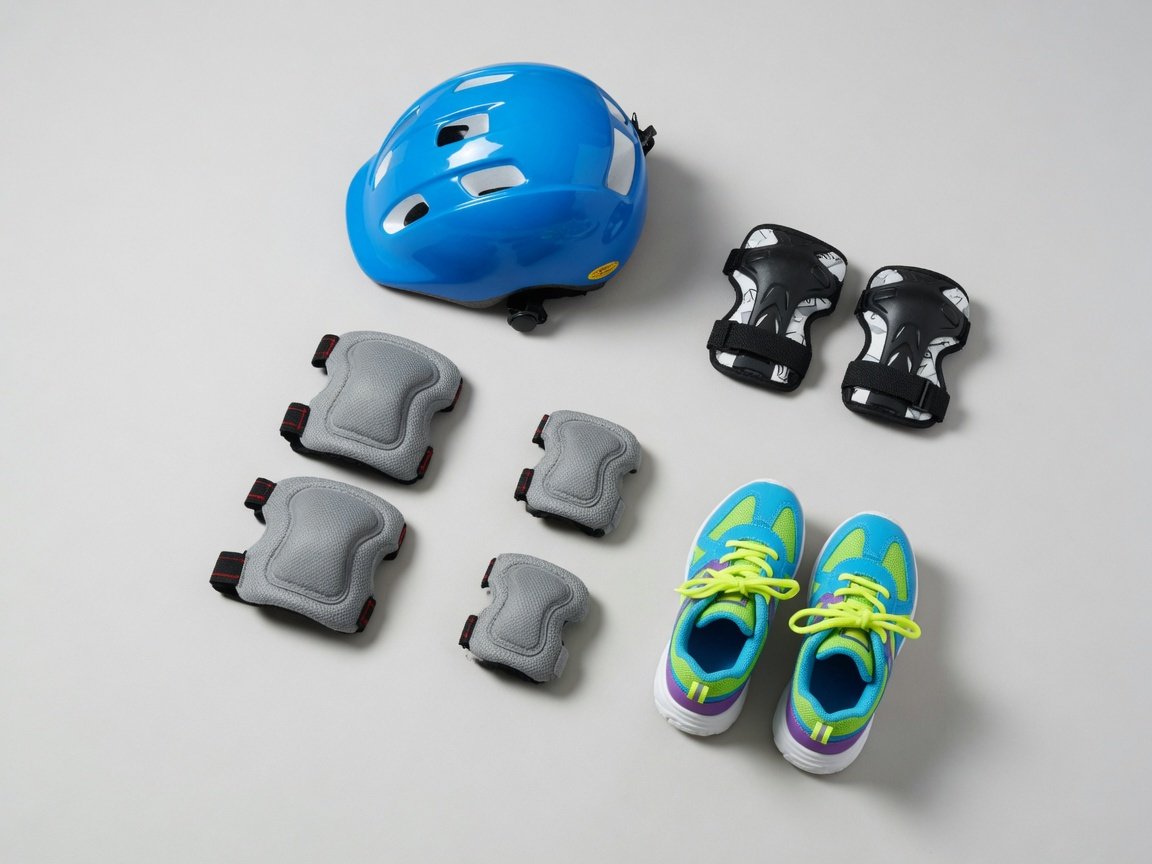
- Helmet — The most important item, full stop. Look for CPSC, EN 1078, or ASTM F1492 certification. It should sit two fingers above the eyebrows with side straps forming a V just below each ear. Replace after any significant impact, even if there’s no visible damage to the shell.
- Wrist guards — Protect the most injury-prone area. Rigid splint wrist guards absorb impact and limit hyperextension. Essential for all beginners and recommended for all children under 10 regardless of experience level.
- Knee pads — Protect against the impact and abrasion injuries that come from forward falls onto tarmac. Hard-shell caps offer better protection; foam-lined caps are more comfortable for daily wear. Both are substantially better than bare knees.
- Elbow pads — Particularly valuable during the learning phase when falls are most frequent. Elbow lacerations and fractures are common in younger children and easily prevented.
- Sturdy closed-toe shoes — Grip tape on the deck does most of the work, but a flexible-soled shoe with a firm grip helps with propulsion, braking, and foot placement. Sandals, flip-flops, and bare feet are not safe for kick scooter riding.
How Do You Inspect a Kick Scooter Before Every Ride?
A pre-ride safety check takes around two minutes and catches most equipment problems before they turn into accidents. Build this into the ritual from the start: gear goes on, the scooter gets checked, then you ride. Here’s the six-point routine that covers every common failure point.
🔧 Six-Point Pre-Ride Safety Inspection
- Wheels and tyres: Look for visible cracks, flat spots, or surface damage. Confirm each wheel spins freely without side-to-side wobble. On models with pneumatic tyres, squeeze for firmness before every ride.
- Brakes: Apply the rear foot brake with firm pressure. It should engage smoothly without grinding and stop the wheel progressively. If the scooter has a handbrake, pull it firmly and check for solid resistance without excessive travel.
- Handlebars: Grip with both hands and attempt a rotational twist. There should be zero play. Check that any height-adjustment clamp is fully locked before mounting.
- Deck: Run your fingers across the riding surface and check for cracks, splits, or areas of lifted grip tape. A cracked deck can fail suddenly under a rider’s weight.
- Folding mechanism: If the scooter folds, confirm the latch is fully engaged in the open position. Test by pressing down firmly on the deck before mounting for the first time that session.
- Bolts and fasteners: Do a quick visual and tactile check on the handlebar stem, wheel axles, and deck mounting points. Anything that moves or rattles needs tightening before the ride begins.
Involving children in this check from day one builds a sense of ownership over their equipment — and a child who can spot a wobbly handlebar is also a child more likely to notice something feeling wrong mid-ride and stop before a small problem becomes an accident.
Are Three-Wheel Scooters Safer for Young Children?
For children under 5, the answer is almost always yes. Three-wheel scooters — with either a two-front or two-rear wheel configuration — offer significantly more lateral stability than two-wheel models. Young children are still developing the balance reflexes, core stability, and spatial anticipation needed to manage a two-wheel scooter safely through turns and over uneven ground. The wider base of a three-wheel design provides a far more forgiving experience during the learning phase.
Injury data supports the stability advantage. Young riders on three-wheel scooters show notably lower fall rates compared to peers on two-wheel models, particularly during the first three to four months of independent riding. If you’re choosing a first scooter for a toddler or preschooler, three-wheel kick scooters designed for young kids offer a well-curated range of options across different deck heights, weight limits, and handlebar configurations that prioritise stability without sacrificing the fun.
As children develop stronger balance skills — typically between ages 5 and 7 — transitioning to a two-wheel model becomes developmentally appropriate and naturally appealing. The key is timing that transition to actual demonstrated skill level rather than assumed readiness. Most children make the move smoothly once they’re consistently riding the three-wheel model without hesitation through turns at a moderate pace.
What Road Rules Should Every Kick Scooter Rider Know?
Kick scooters occupy a legally ambiguous position in many countries, sitting somewhere between pedestrian and cycle traffic. In the UK, personal kick scooters are technically classified as vehicles under the Highway Code, meaning they should not be ridden on footpaths — though in practice, enforcement is inconsistent. Rental e-scooter schemes operating within approved local authority trials have different rules still. Parents and older riders should check the specific regulations for their area before riding on public roads.
Whatever the local legal position, the practical rules of safe riding apply everywhere. Riders should maintain predictable lines, signal turns with clear hand signals, yield to pedestrians in shared spaces, and ride at a speed that allows them to stop comfortably within their visible distance ahead. Bright or reflective clothing matters more than most riders realise — especially in autumn and winter when light drops quickly after school hours.
One underestimated hazard for urban riders: the door zone of parked cars. A driver’s door swinging open provides virtually no reaction time at even modest scooter speeds. Teaching children to ride at least one full car-door width away from any parked vehicle is a habit that takes seconds to explain and could prevent a serious collision.
How Can Parents Build Safe Riding Habits in Their Children?
Safe riding habits form fastest in the first few weeks — before patterns are set. Starting in a genuinely controlled environment gives beginners space to focus on balance and braking without simultaneously managing traffic. A quiet car park, a smooth garden path, or a low-traffic residential cul-de-sac are all ideal first locations. A busy pavement is not.
Before the first ride, spend 10-15 minutes on the core mechanics: how to mount and dismount safely without jumping, how to brake progressively rather than stamping, and how to look ahead at the surface rather than watching the deck. A structured approach to learning kick scooter riding as a beginner gives you a clear progression framework that builds skills in the right sequence — making the process faster and safer than learning by trial and error.
📊 Case Study: Structured Rider Education Reduces ER Visits by 60%
A 2025 paediatric injury prevention study examining community scooter safety programmes found that children who received structured riding education — covering pre-ride equipment checks, protective gear fitting, and basic road awareness — recorded a 60% reduction in scooter-related ER visits over a 12-month follow-up period, compared to an unstructured riding group of equivalent size. The research concluded that early education was substantially more effective than equipment regulation alone, with the helmet and wrist guard fitting component delivering the single largest individual impact on injury rates.
Model the behaviour you want to see. Children who watch adults skip helmets “just for a quick ride” will replicate that reasoning. The habits built in the first months of riding become the defaults for years to come. Visible, consistent adult compliance with safety practices is one of the most powerful tools available to any parent — and costs nothing.
What Does Kick Scooter Safety Look Like in 2026 and Beyond?
The safety landscape for kick scooters is improving in 2026, driven by better equipment engineering, infrastructure investment, and growing safety awareness in schools and communities. Three developments are worth following closely.
Helmet technology: MIPS (Multi-directional Impact Protection System) helmets are now widely available at accessible mid-market price points after years as a premium-only feature. MIPS adds a slip-plane layer inside the shell that reduces rotational force transmitted to the brain during angled impacts — the type most commonly seen in scooter falls. For families buying helmets in 2026, MIPS certification is worth prioritising where budget allows.
Scooter design: Entry-level children’s scooters in 2026 are meaningfully better engineered than their predecessors — wider decks, lower ride heights, more responsive braking systems, and stronger folding mechanisms reflect years of incremental improvements driven by injury data and parent feedback. If you’re choosing a first scooter and want to know which safety features actually matter, this complete guide to choosing a scooter for a beginner covers exactly what to look for at each age and skill level.
Infrastructure: Investment in shared cycle and micro-mobility paths is expanding across UK and European cities. Dedicated lanes physically separate scooter riders from pedestrian and vehicle traffic — statistically the highest-risk riding environment. Most major UK cities are expected to publish micro-mobility strategies with on-road infrastructure commitments by 2027. Until that infrastructure reaches your area, route planning and proactive speed management remain the most effective tools available.
Frequently Asked Questions About Kick Scooter Safety
Are kick scooters dangerous for children?
Kick scooters carry genuine injury risk — but that risk is manageable with the right equipment and habits. Research shows around 40% of kick scooter accidents involve head injuries, which is why helmets are non-negotiable. With a properly fitted certified helmet, wrist guards, and knee pads, and by learning to ride in a controlled environment first, children can enjoy kick scooters safely. The risk is real, but it is substantially reduced by simple, consistent precautions.
What is the most common kick scooter injury?
Wrist and forearm fractures are the most commonly reported kick scooter injuries across all age groups. They’re caused by the instinct to break a fall with outstretched hands. Head injuries — ranging from mild concussions to severe traumatic brain injuries — are the most serious category, accounting for roughly 40% of all accident cases. Ankle sprains and knee injuries are also frequently reported, particularly in older children and adults riding at higher speeds.
Does my child need a helmet for a kick scooter?
Yes — unambiguously. A certified helmet reduces the risk of serious head injury by up to 85% in the event of a fall. Children’s heads are proportionally larger and heavier relative to their bodies, making them more susceptible to forward-rotation falls and head impact. Look for CPSC, EN 1078, or ASTM F1492 certification and check fit every few months as children grow. Replace any helmet that has absorbed a significant impact, even if the shell looks undamaged.
At what age can a child ride a kick scooter safely?
Most children can begin on a three-wheel kick scooter from around age 2-3 with appropriate supervision. Two-wheel scooters typically suit children from age 5 upwards, once sufficient balance and hazard awareness have developed. The key factor is developmental readiness — balance, coordination, and the ability to follow simple instructions — not age in isolation. Always start in a traffic-free environment regardless of how confident the child appears.
Are three-wheel scooters safer than two-wheel models for young children?
Yes, for children under 5-6 years old, three-wheel scooters offer significantly greater stability. The wider base reduces the likelihood of lateral falls during turns and on uneven surfaces. Injury data shows lower fall rates for young riders on three-wheel models during the learning phase compared to peers on two-wheel scooters. As balance improves, transitioning to a two-wheel model is developmentally appropriate and typically happens naturally around age 5-7 without much prompting.
What should I check on a kick scooter before riding?
The six key checks are: (1) wheels for damage and secure attachment, (2) brakes for smooth and firm engagement, (3) handlebars for zero rotational play, (4) deck for cracks or lifted grip tape, (5) folding mechanism fully locked open, and (6) all bolts and fasteners checked for tightness. This two-minute routine catches most equipment issues before they cause accidents, and is a great habit for children to develop ownership over from an early age.
Can kick scooters be ridden on roads or footpaths?
Rules vary by country and region. In the UK, personal kick scooters are technically classified as vehicles and should not be ridden on footpaths under the Highway Code, though enforcement is inconsistent. In many other countries, footpath riding is permitted at low speeds with clear pedestrian right of way. Regardless of local law, the practical rules always apply: yield to pedestrians, signal turns, stay out of the door zone of parked cars, and ride at a speed you can genuinely control.
The Bottom Line: Are Kick Scooters Worth the Risk?
Kick scooters are genuinely great for children — they build balance, coordination, confidence, and a love of outdoor activity that translates across sports and movement for years. The risks are real, but they’re not a reason to keep kids off scooters. They’re a reason to set things up properly from the start.
Here’s a practical implementation sequence to work through before your child’s first ride — and in the weeks that follow:
- Before Day 1 — Kit up first: Buy a certified helmet and full protective gear (wrist guards, knee pads, elbow pads). Everything gets fitted and adjusted before the scooter ever leaves the house.
- Day 1 — Controlled environment only: Choose a quiet, flat, traffic-free space. Spend 15 minutes on mounting, dismounting, braking, and looking ahead before any free riding begins.
- Day 1 onwards — Build the check routine: Do the six-point pre-ride inspection together. Repeat it until your child can lead it independently — usually within two to three weeks.
- Weeks 2-4 — Graduated environments: Introduce gentle slopes, slightly uneven surfaces, and light shared-use paths progressively as control improves. Don’t rush this phase.
- Months 1-6 — Recheck gear fit regularly: Children grow fast. A helmet or wrist guard that fitted well in September may not by March. Make gear checks part of each season’s start.
The accident statistics are alarming until you understand what drives them: riders without helmets, in environments they aren’t ready for, on equipment that hasn’t been checked. Remove those factors and the risk picture changes substantially. Start right, ride smart, and kick scooters are one of the best things you can give a child to do outside.